joshua tree
mapping
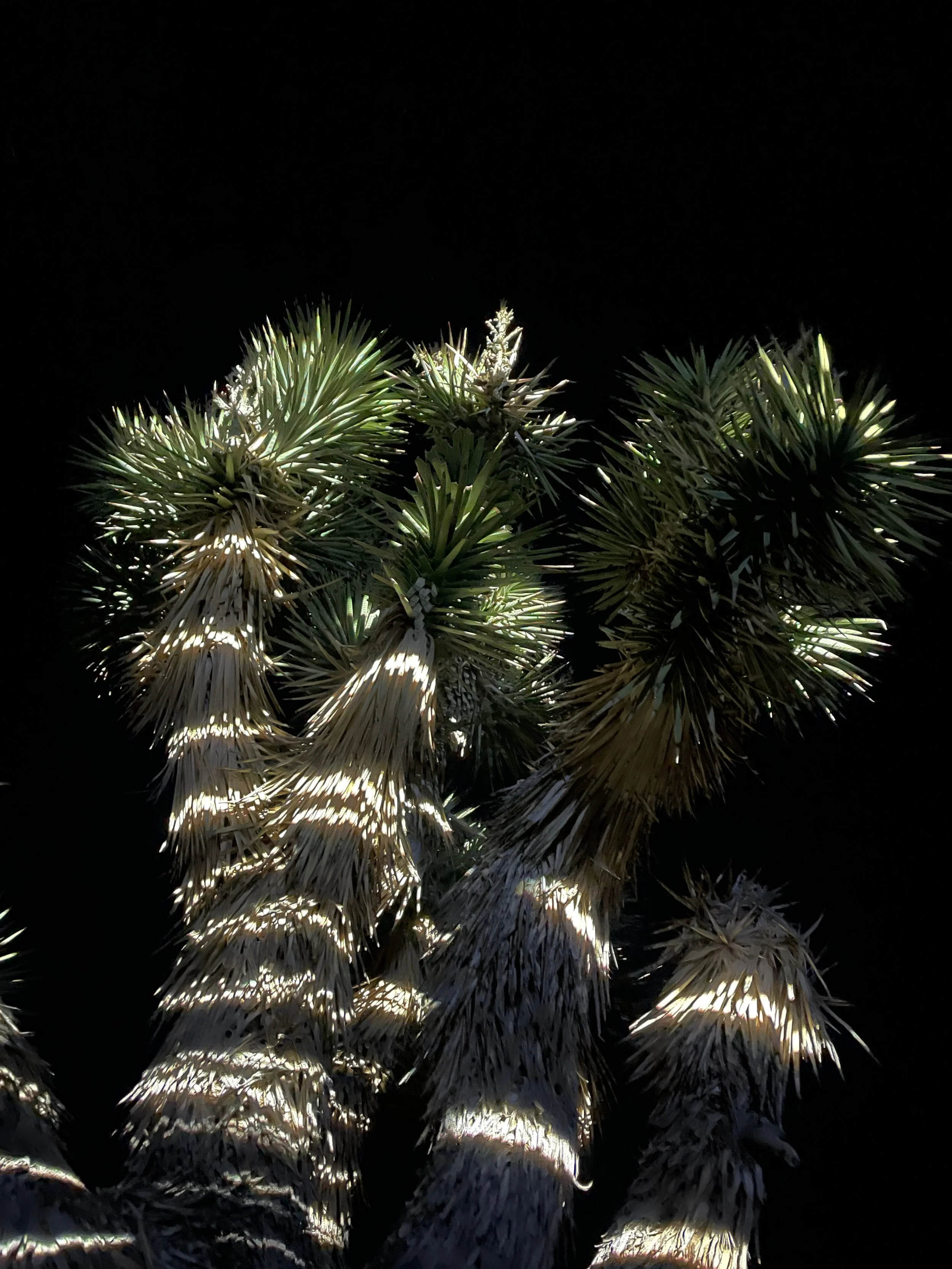
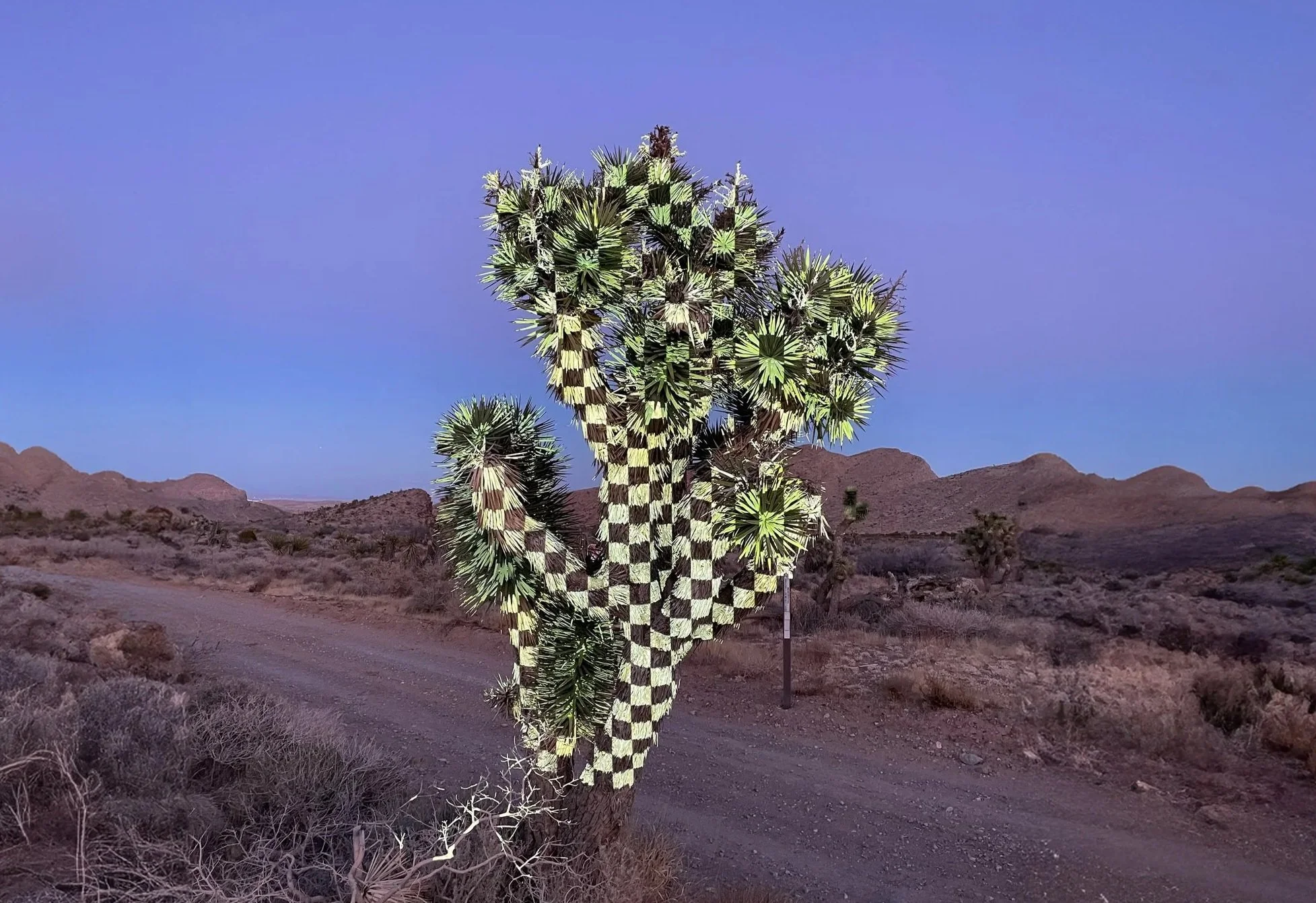
A NOVA Light Labs experiment in projection mapping on a Joshua tree in the Las Vegas desert.
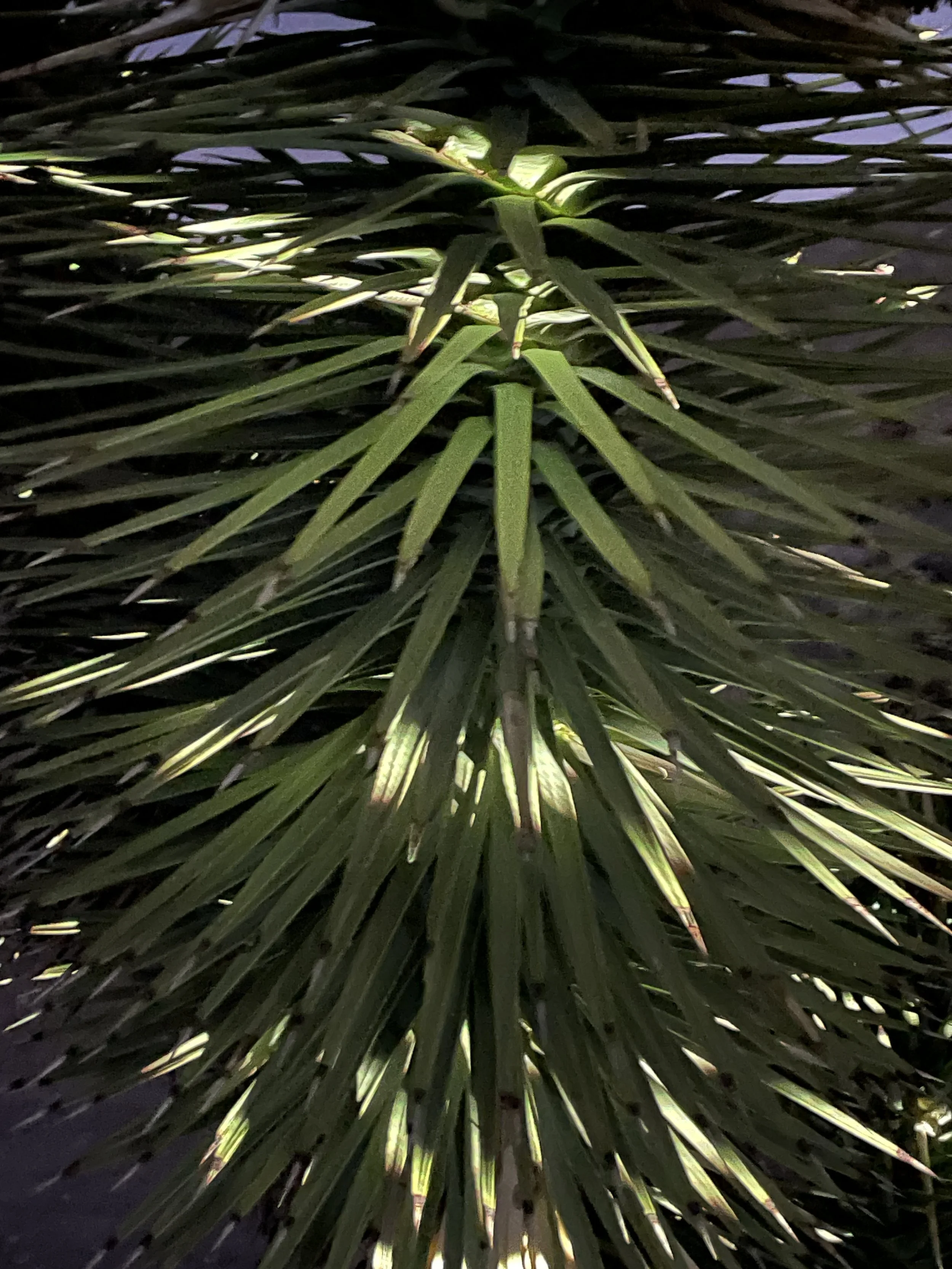
A Joshua tree is a demanding projection surface. The structure is organic and chaotic, yet the chaos carries a pattern: each crown of spines grows in a Fibonacci spiral, the same geometry written into sunflowers and pinecones. That tension between order and chaos is exactly what made it worth testing.
So NOVA drove into the desert with a projector.
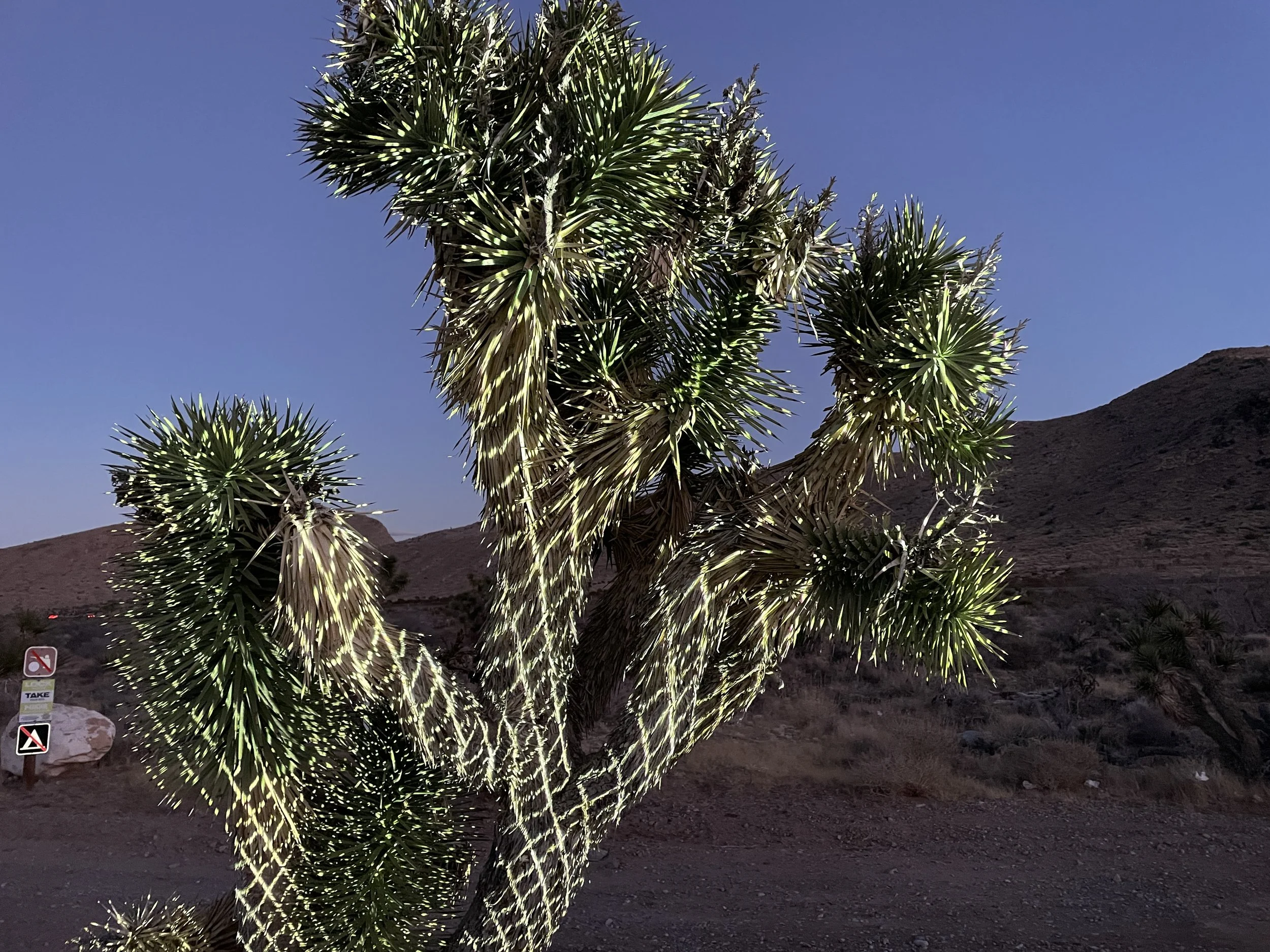
The experiment asked one question. How does projected light behave on a surface this detailed? At night the answers came fast. A checkerboard wraps the trunks and reads like fabric.
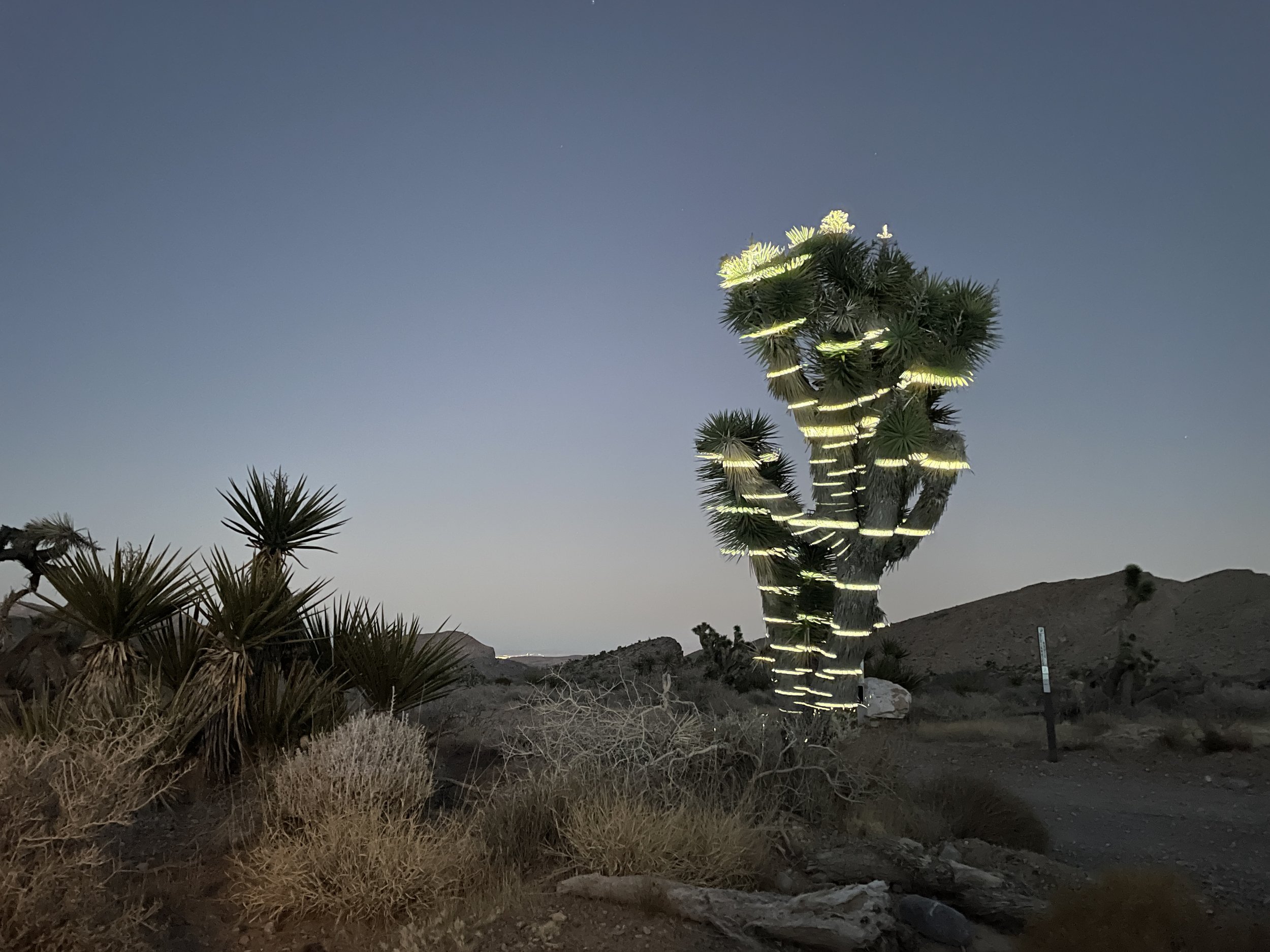
A single scanning line sweeps the branches and, viewed from the right angle, appears to trace every tip of the foliage, climbing and descending the plant in a way that reads as uncanny on camera.
next surfaces
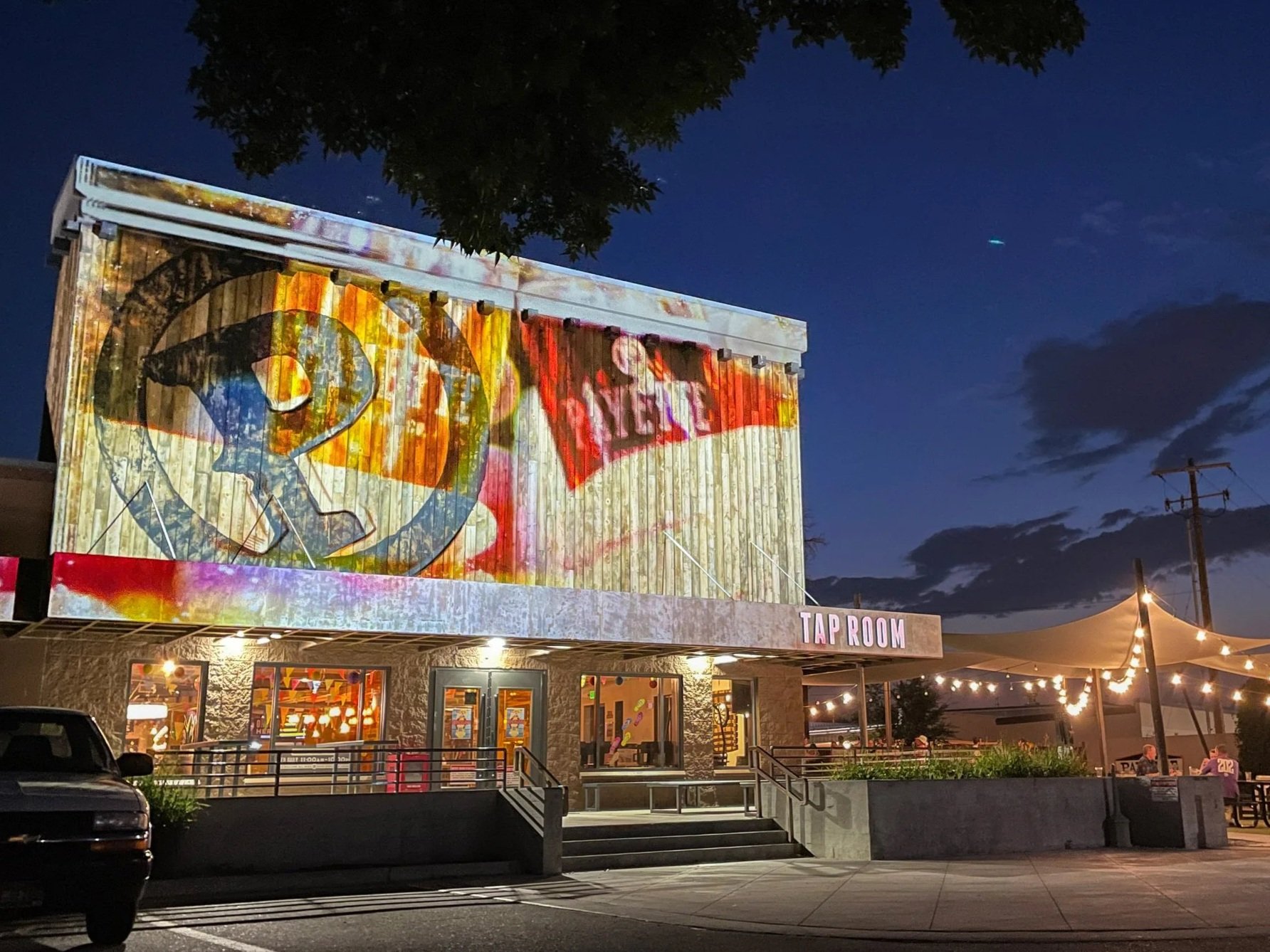
Projection mapping on plants extends past the desert: conservatories, gardens, events, and permanent installations.
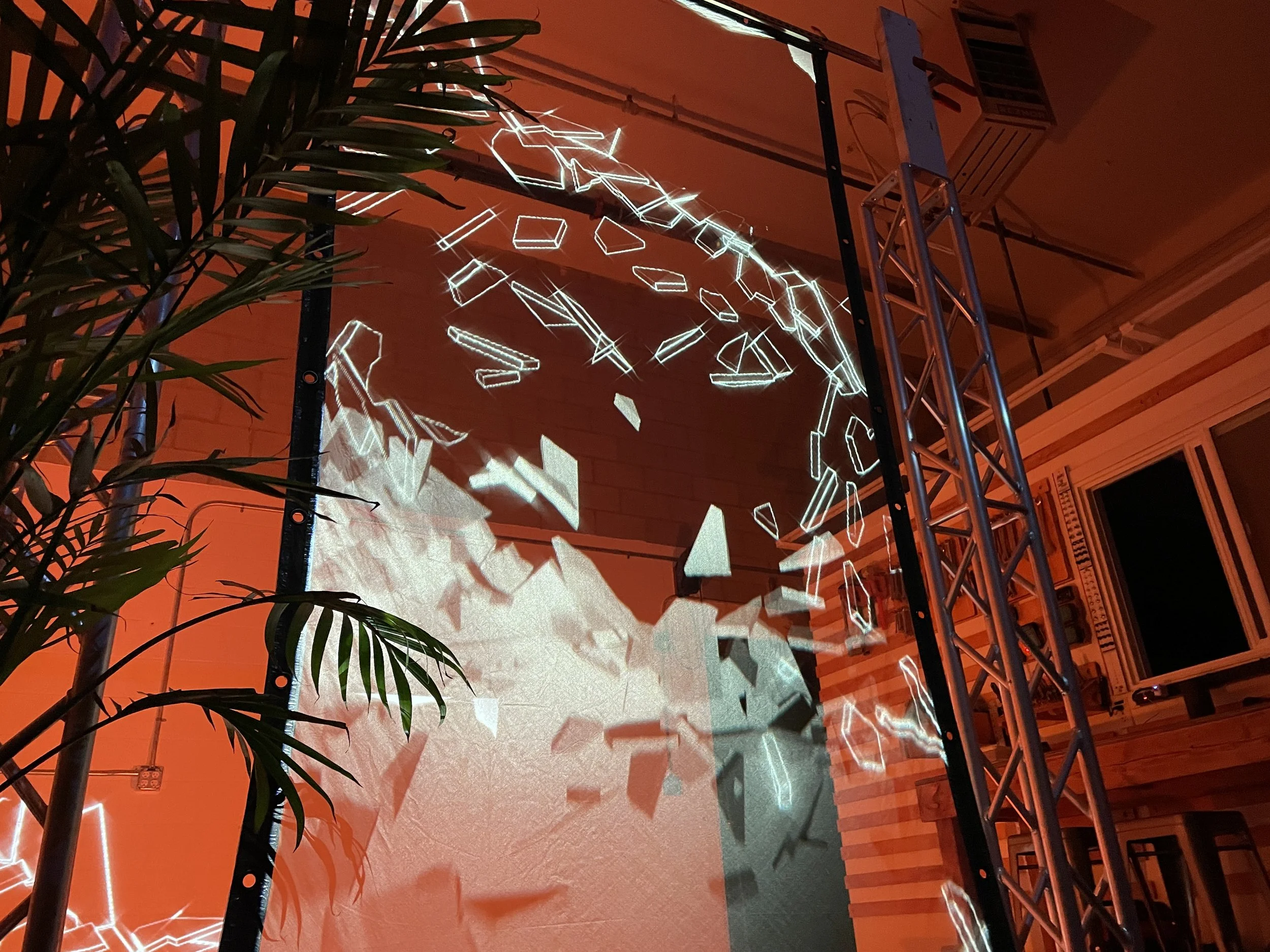
The desert was the test bed. The technique travels. Any plant with strong structure can hold projected light: palms, saguaros, old growth trees, a living wall, a flower at macro scale.
The use cases are already visible. A conservatory could run seasonal light programs across its collection. A garden could hold an after dark event where the plantings themselves carry the visuals. A hotel courtyard could map its signature tree instead of screening video beside it.
NOVA Light Labs designs these systems from the plant outward: survey the structure first, then build content that belongs to it.