bike park
projection mapping
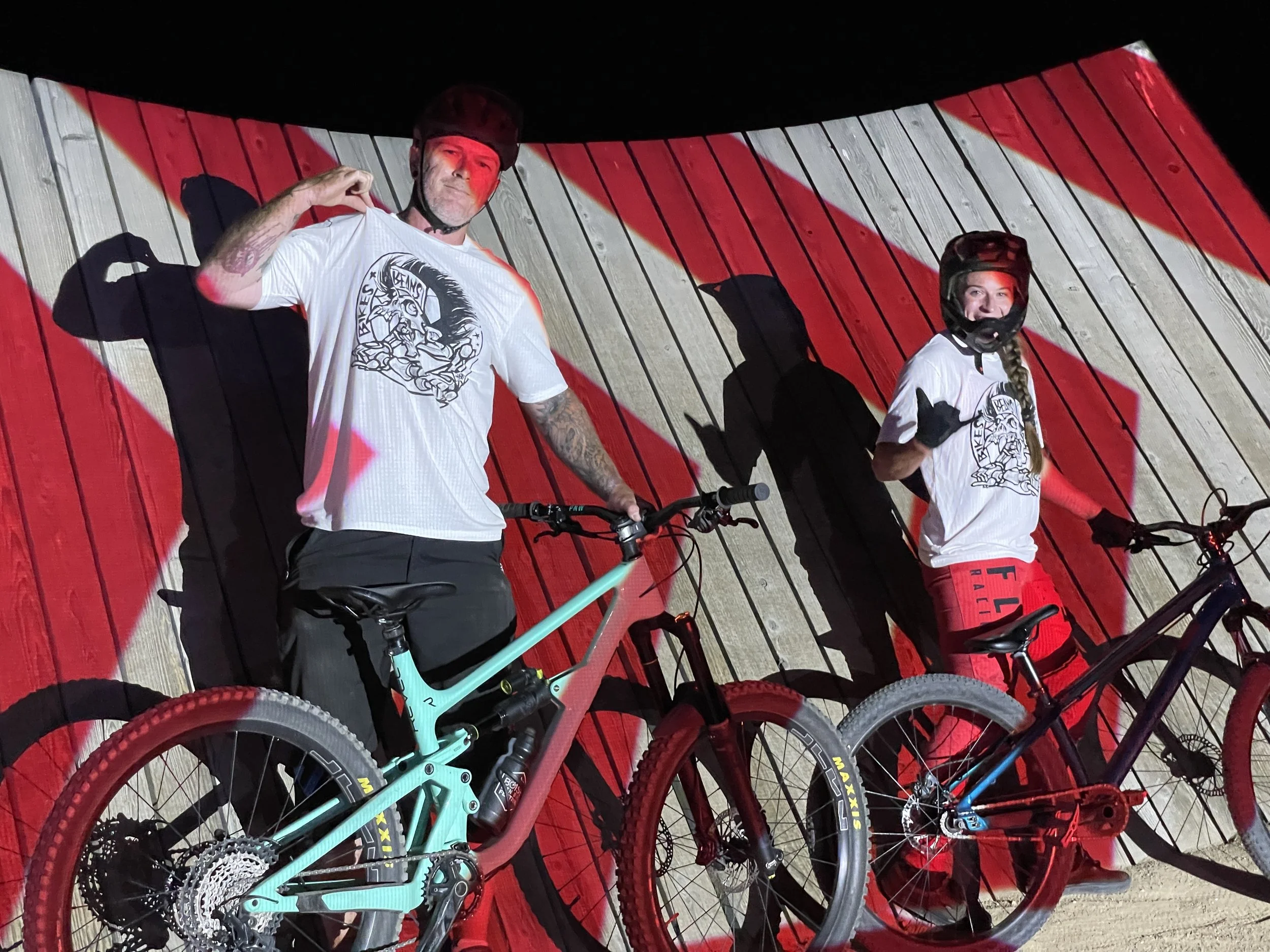
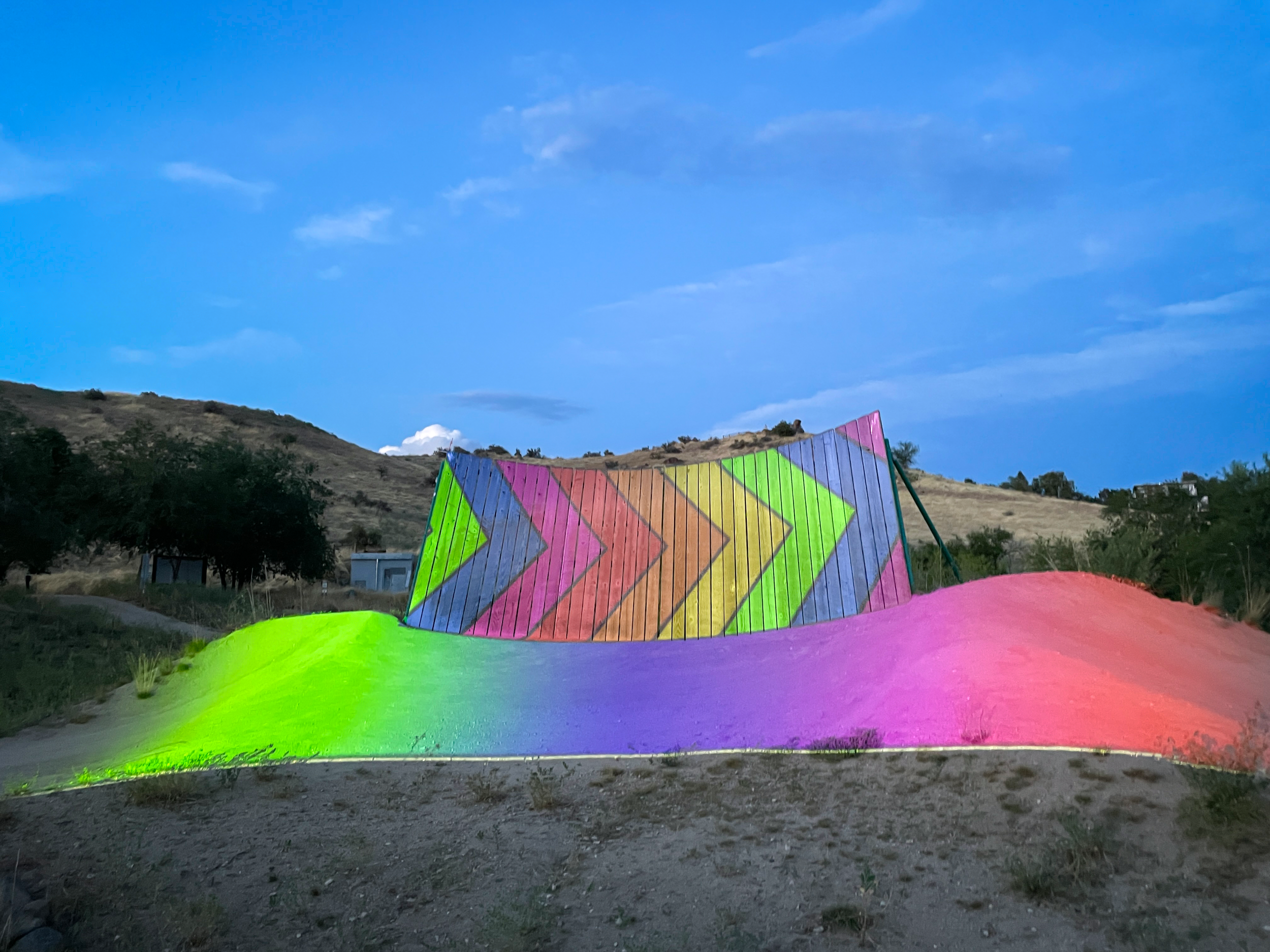
A projection mapping experiment on the wooden wall rides and pump track of the Boise Bike Park in Idaho.
NOVA Light Labs ran a brief crossover experiment: projection mapping on the wooden features of the Boise Bike Park in Boise, Idaho. The site was a pump track with wall rides, berms, and dirt rollers.
The premise was simple. If mapped light can reshape a building facade, it can reshape a takeoff ramp, and the course itself becomes the canvas.
experiment
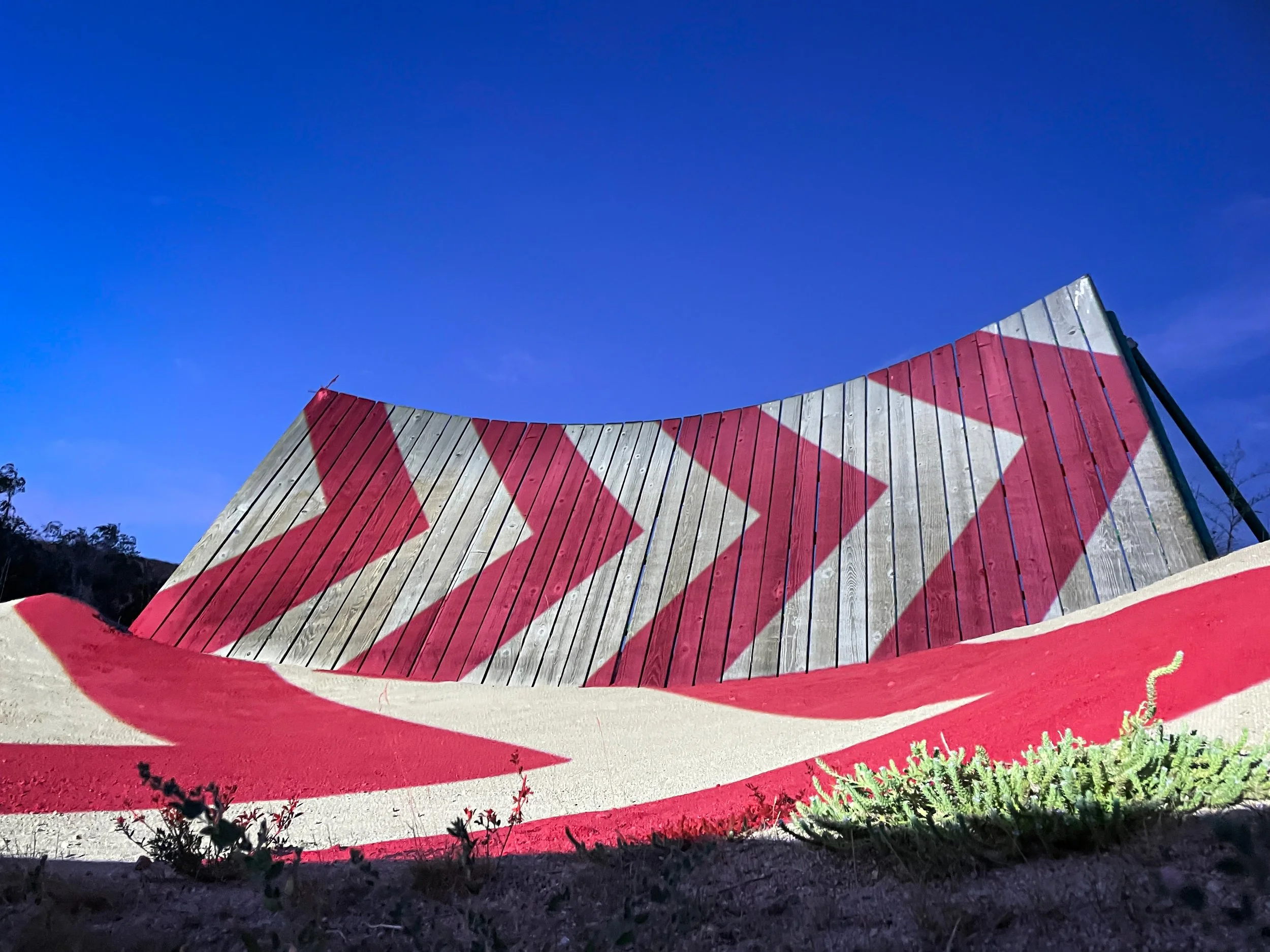
Chevron stripes projected onto a wooden wall ride turned a dirt pump track into a video game course.
The inspiration was the original Mario Kart games and their striped boost ramps. NOVA projected bold red chevrons across a curved wooden wall ride and the dirt berm rolling into it, aligned to the boards and the contour of the track.
The wood stayed bare. The stripes were light. At dusk the pattern read as paint, and by full dark the feature looked lifted straight out of the game.
Why it works
Projected light makes bike park features more interactive for riders and far more photogenic.
A mapped ramp changes how a course rides and how it shoots. Riders aim for the feature because it reads as an invitation, and every pass lands as a usable photo. Nothing is painted. Nothing is permanent. The graphics swap in seconds, so one wall ride can carry a different look every session, or every lap.
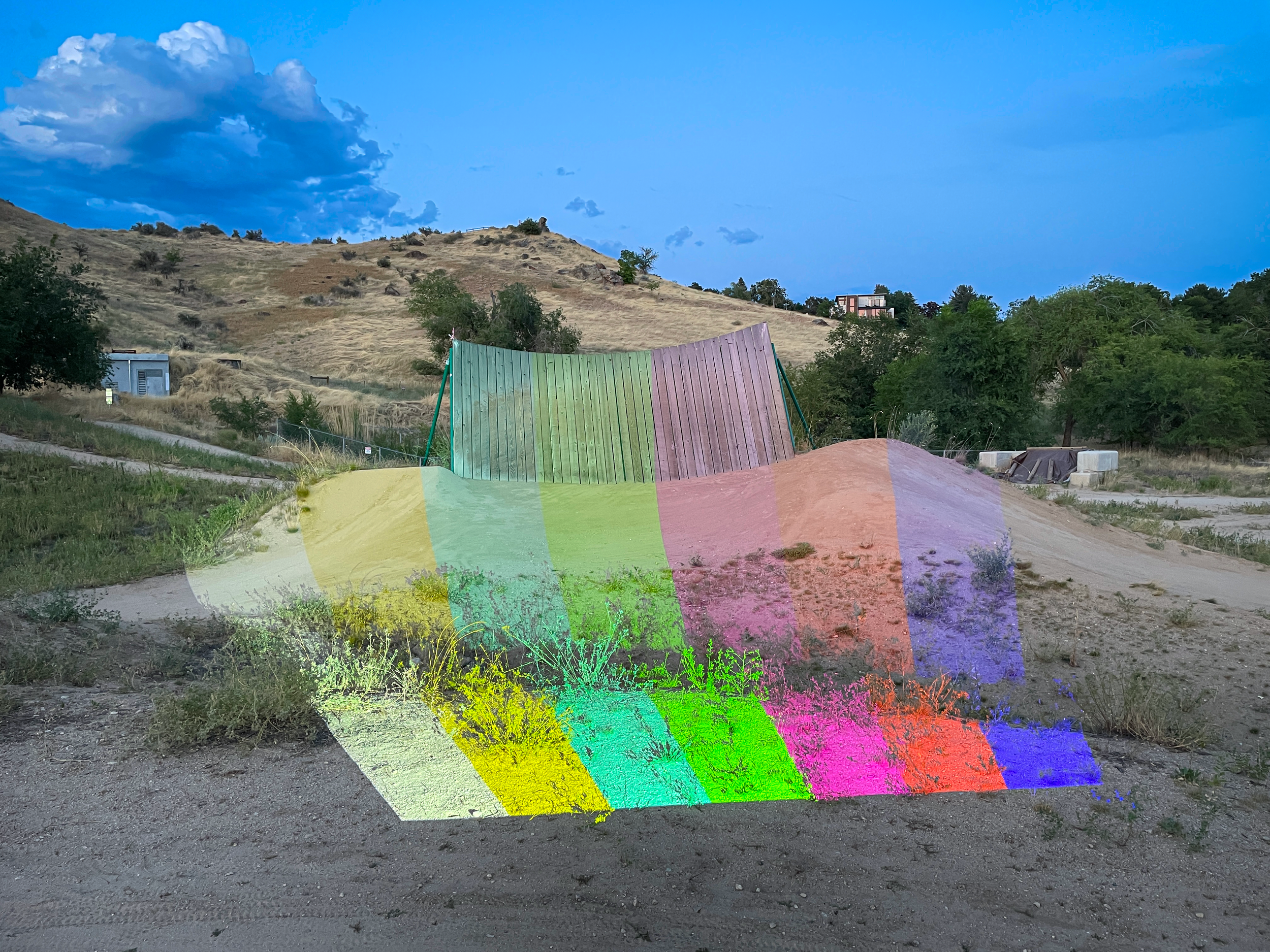
next steps
The same projection mapping approach scales to mountain bike races, BMX events, and beyond.
Could a race run on mapped features? A slopestyle course, a BMX track, or a dual slalom finish could carry live graphics keyed to the event: start gates, lap markers, sponsor moments, or pure spectacle.
The logic extends further. Snowboarding and skateboarding share the same anatomy of clearly defined takeoffs and ramps, and any fixed face can carry mapped light. NOVA is open to that collaboration.