projection domes
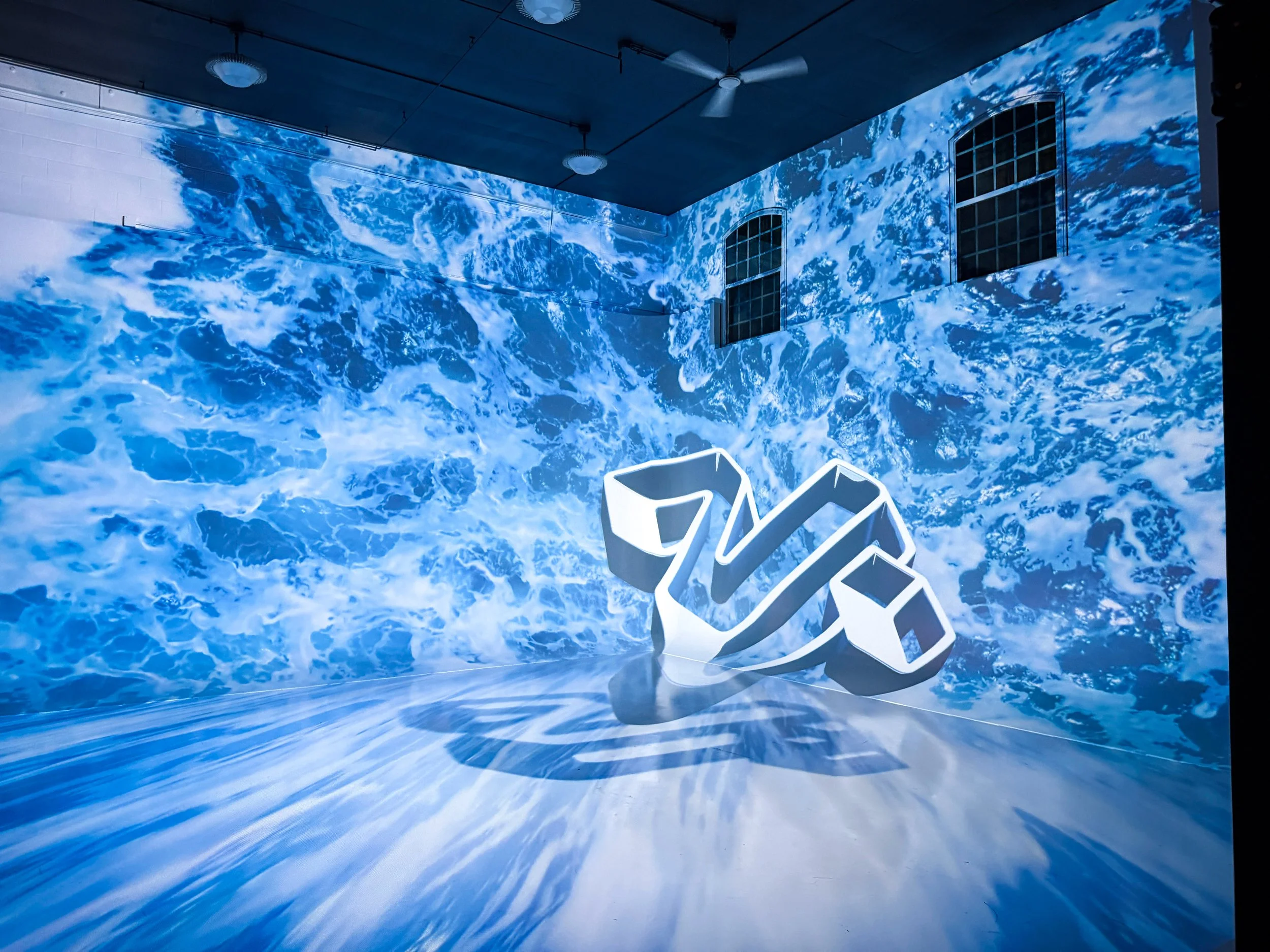
NOVA Light Labs designs and produces immersive projection dome experiences.
From original 360 visual artworks to full dome projection mapping systems.
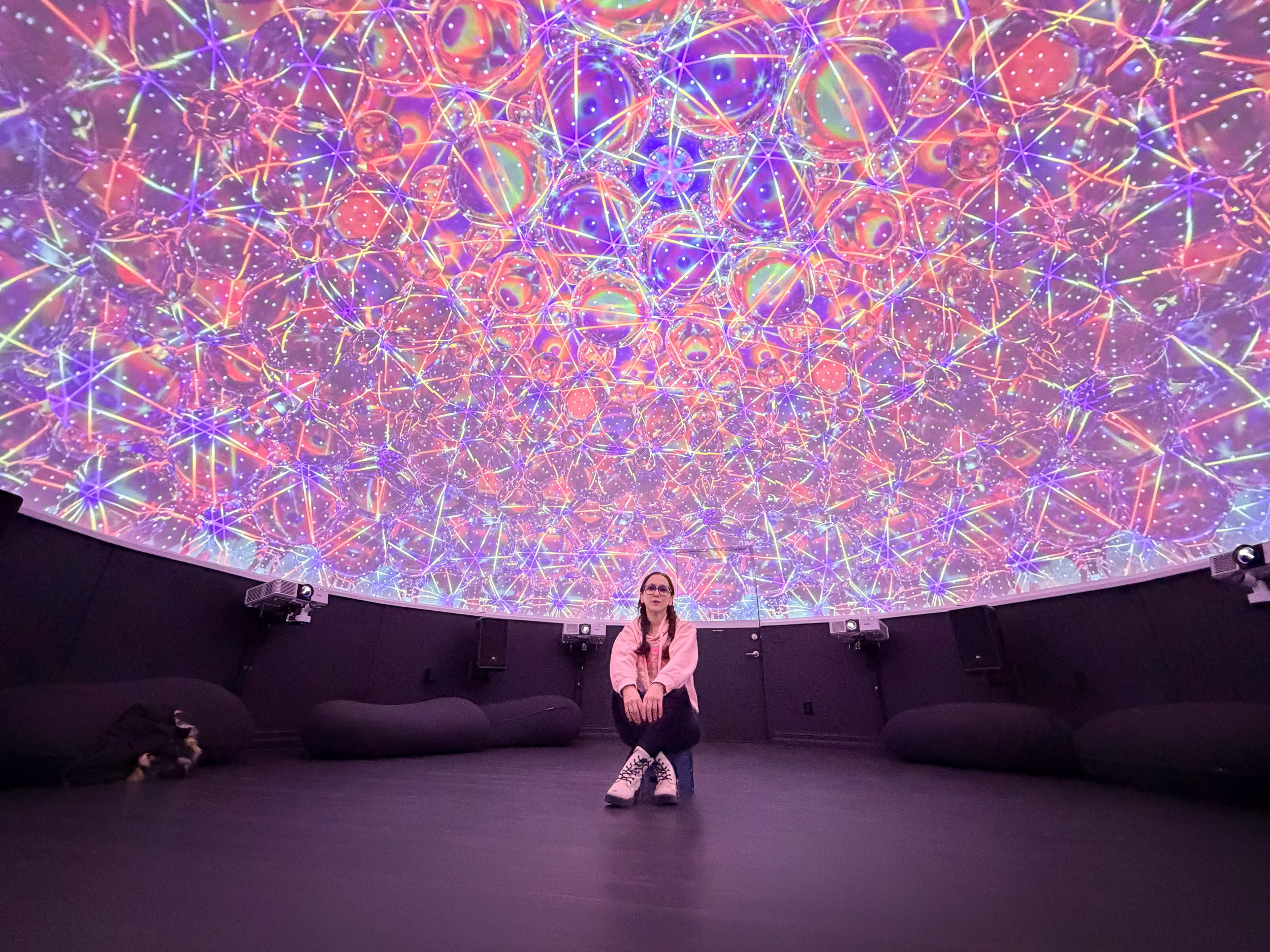
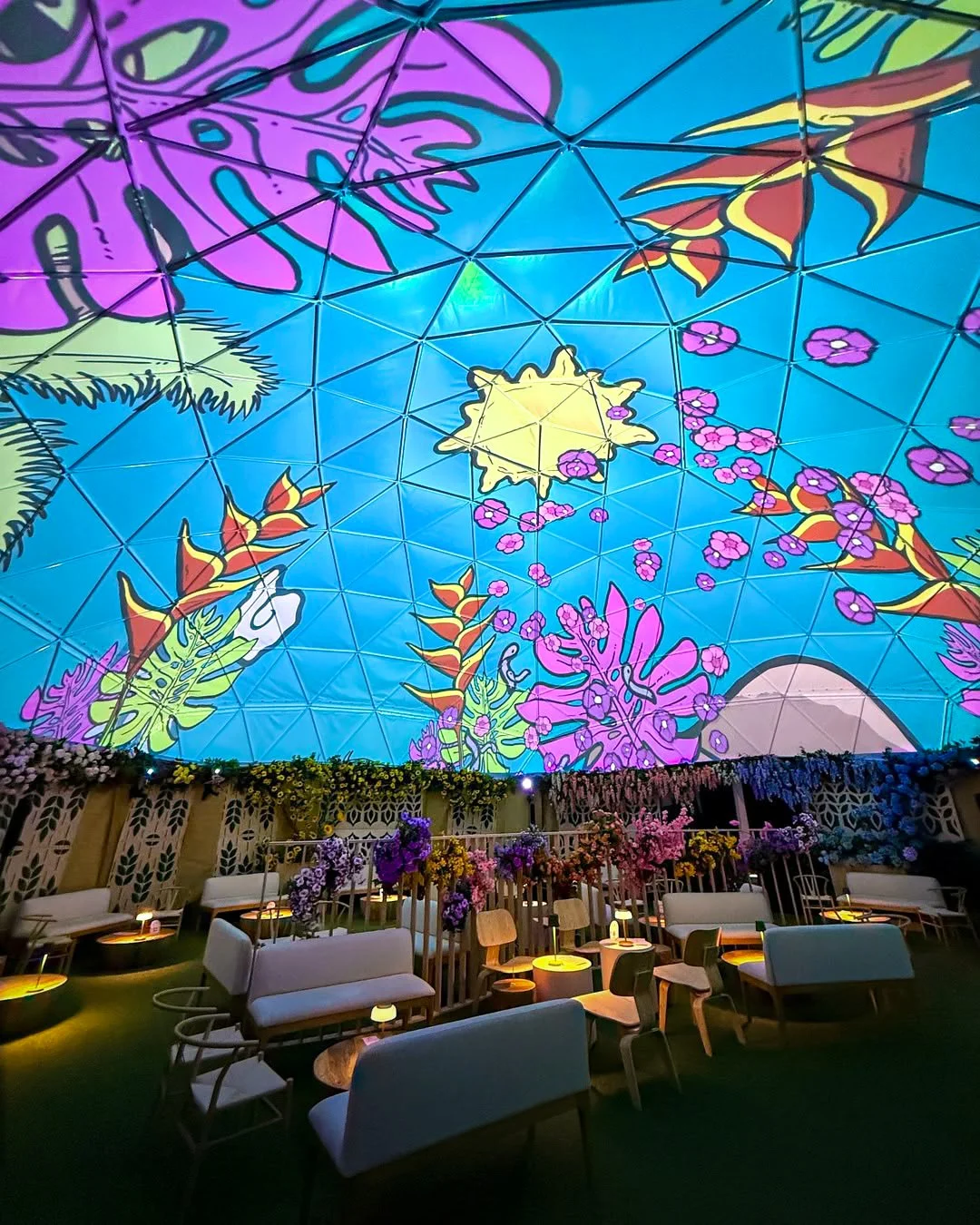
A dome is projection mapping's most immersive canvas. Curved, continuous, no corners. Guests step through the door and the structure disappears, replaced by whatever world the light is carrying that night.
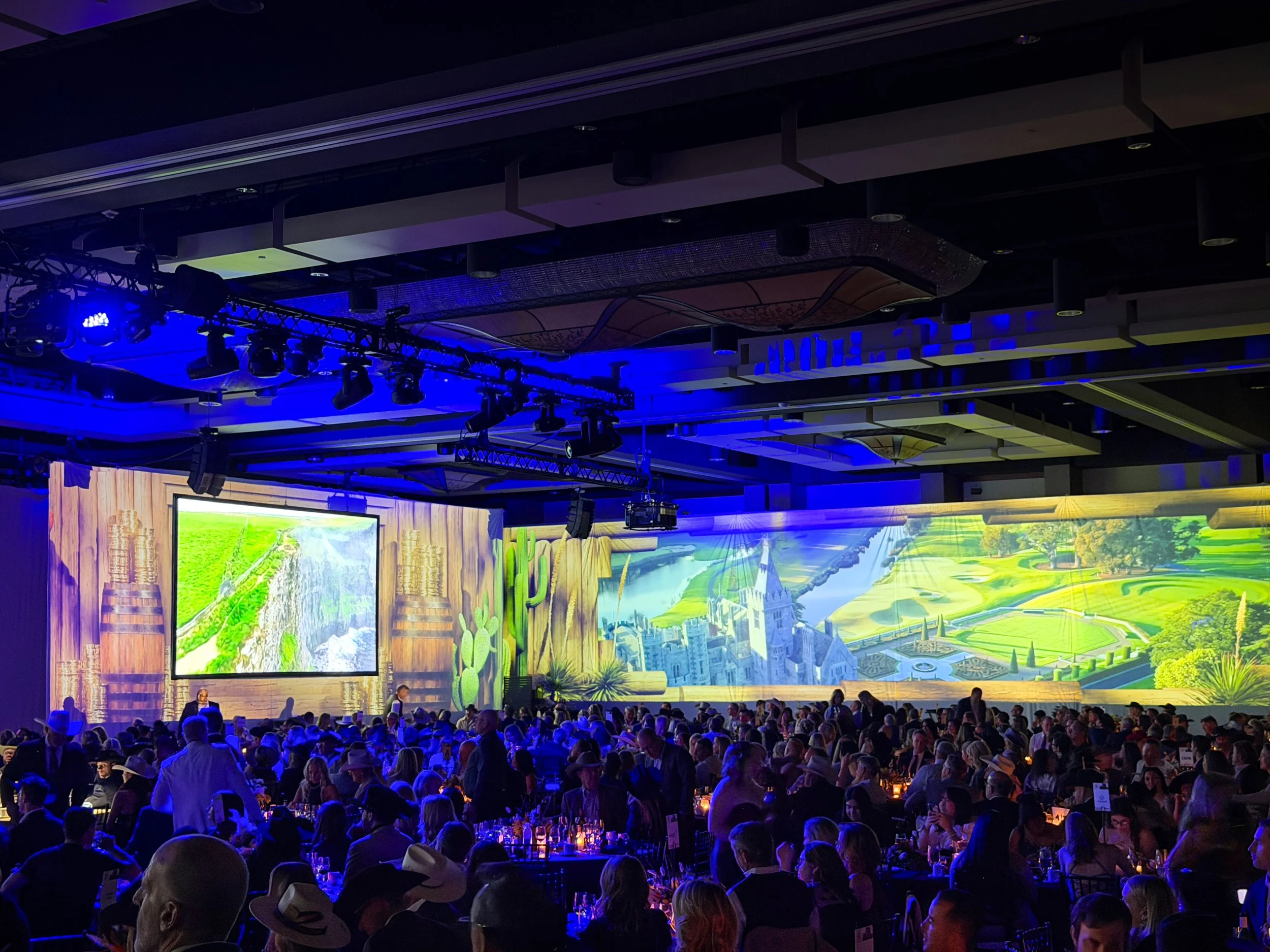
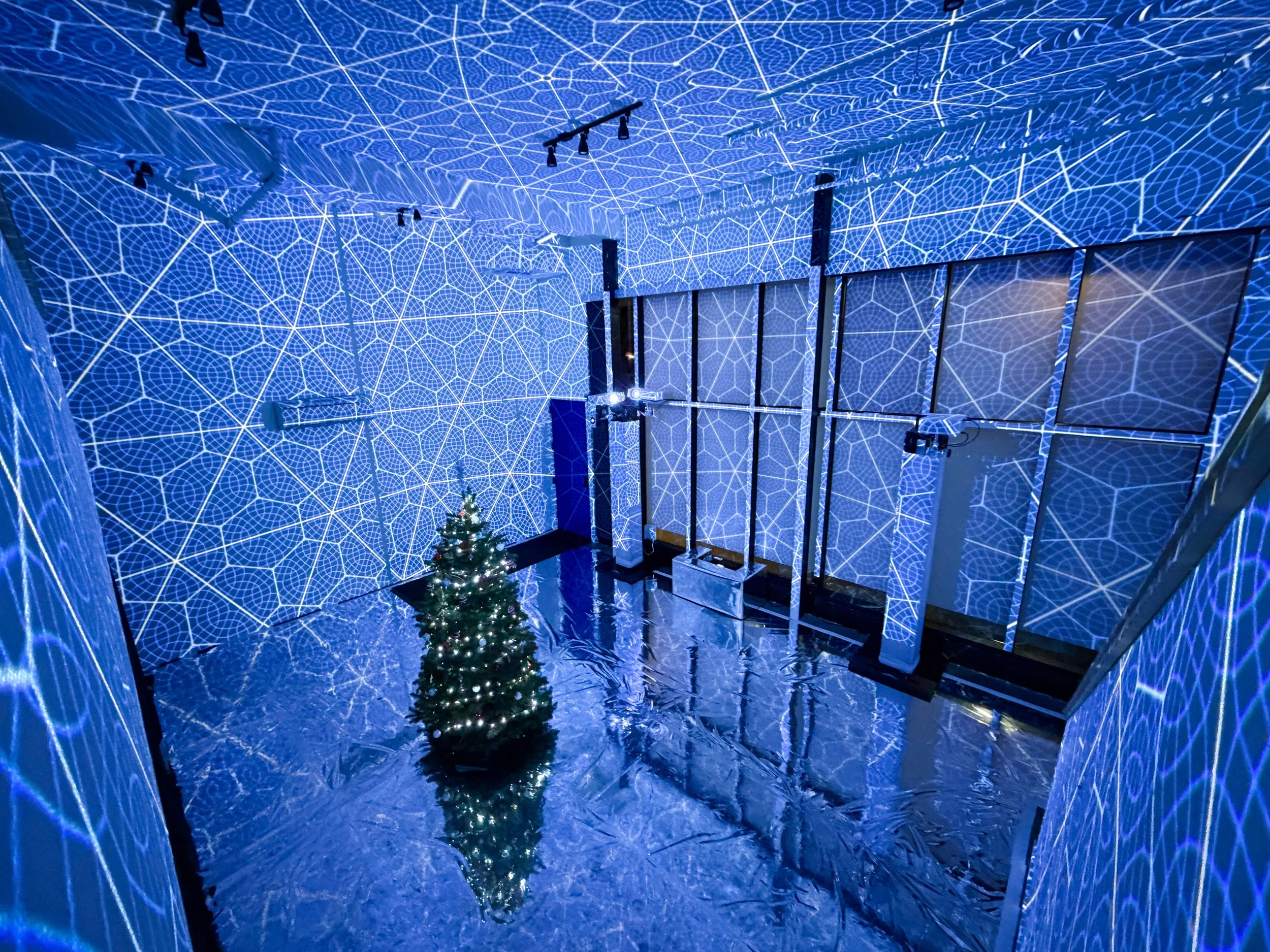
Event domes and permanent installations. Geodesic, inflatable, lofted, or a single 180º degree section. NOVA covers the visuals, the projection system, and the sound, or steps in on a single piece of it.
overivew
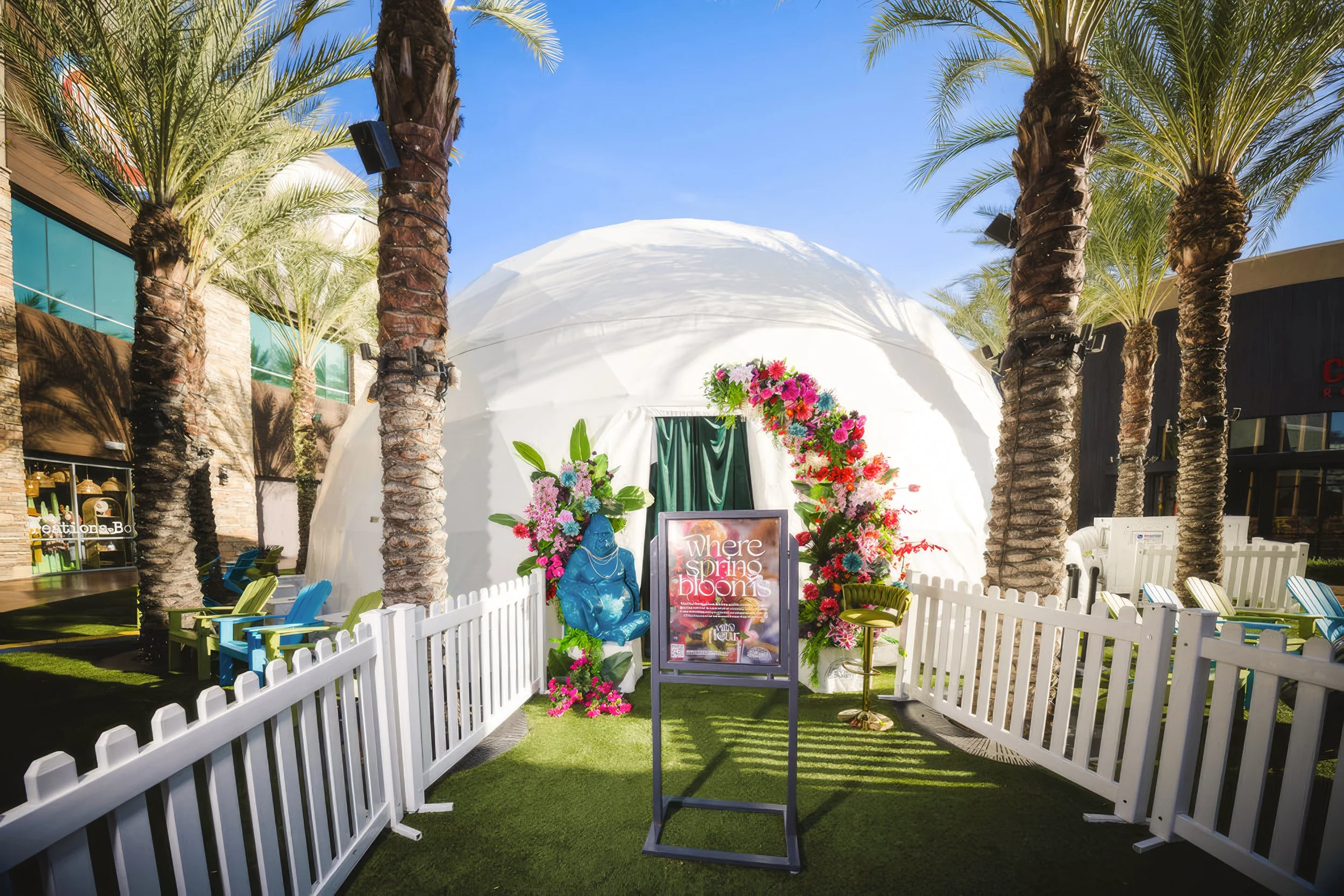
NOVA Light Labs treats immersive dome projection as its own discipline, with its own rules for how the entrance, the room, and the visuals work together.
The entrance is the first effect. A tunnel, an airlock, a second door, a threshold that holds guests for a beat before the dome opens up around them. Crossed once, the reveal lands whole. It also seals the room, and a sealed room is what keeps the world from flickering off every time somebody walks in.
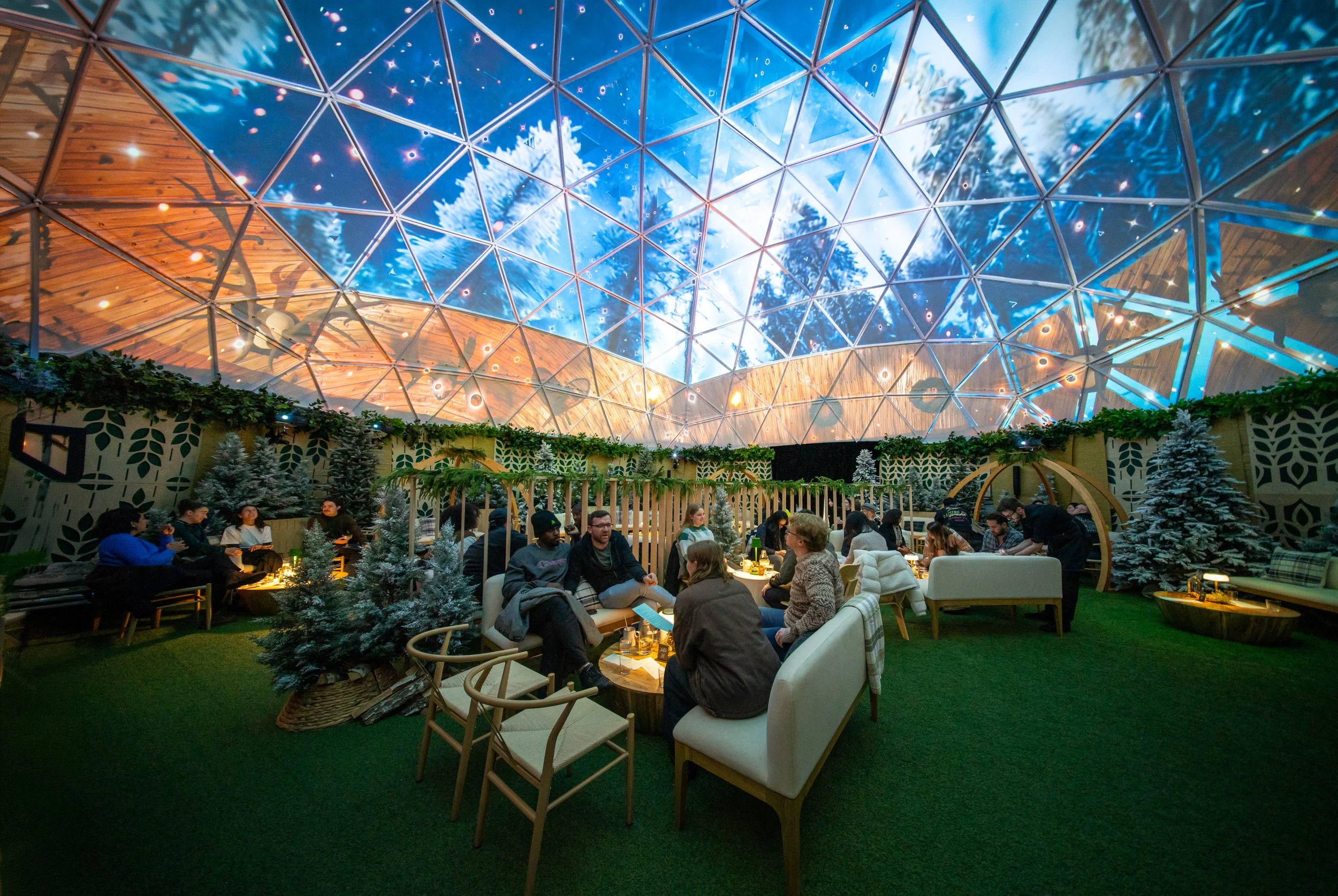
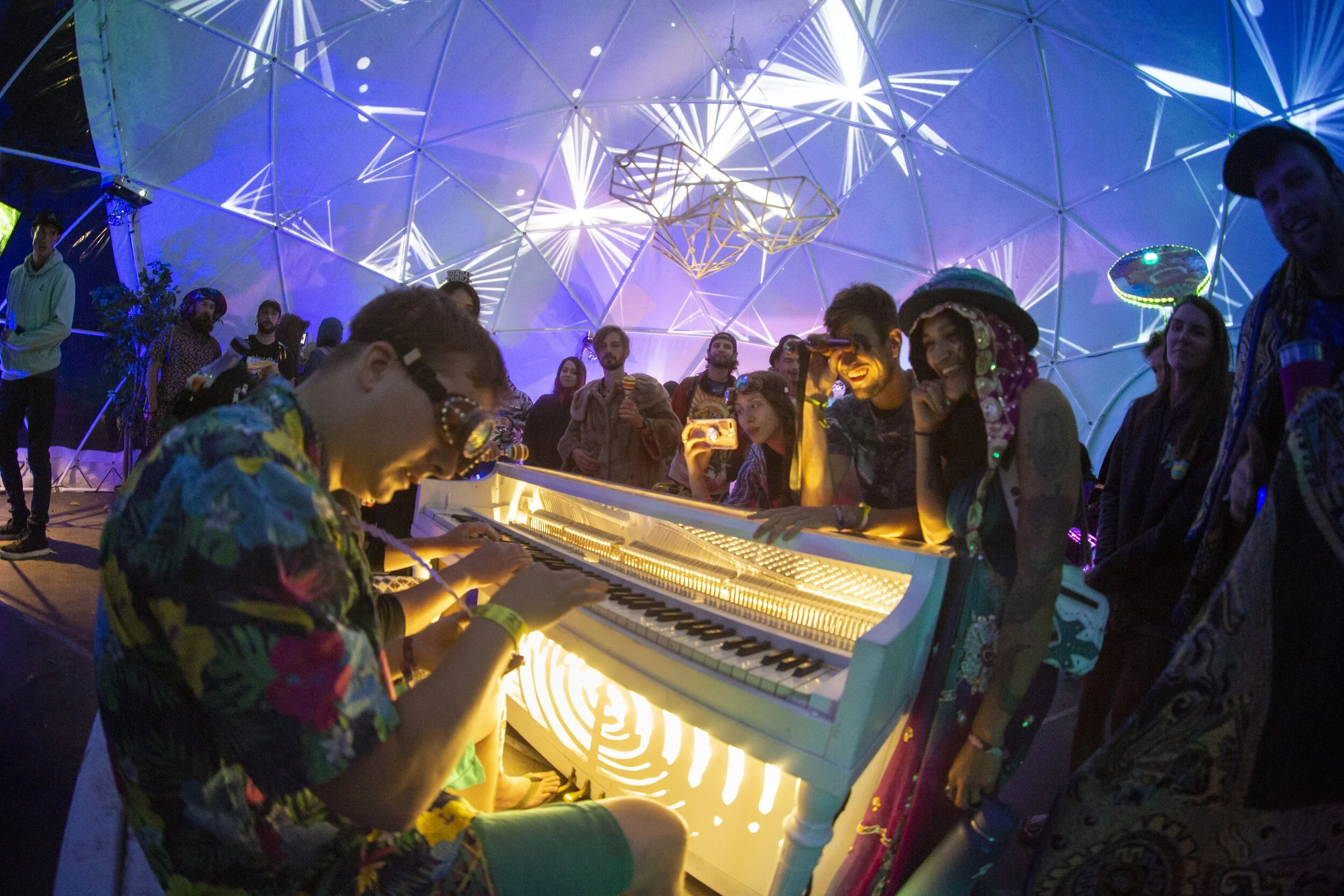
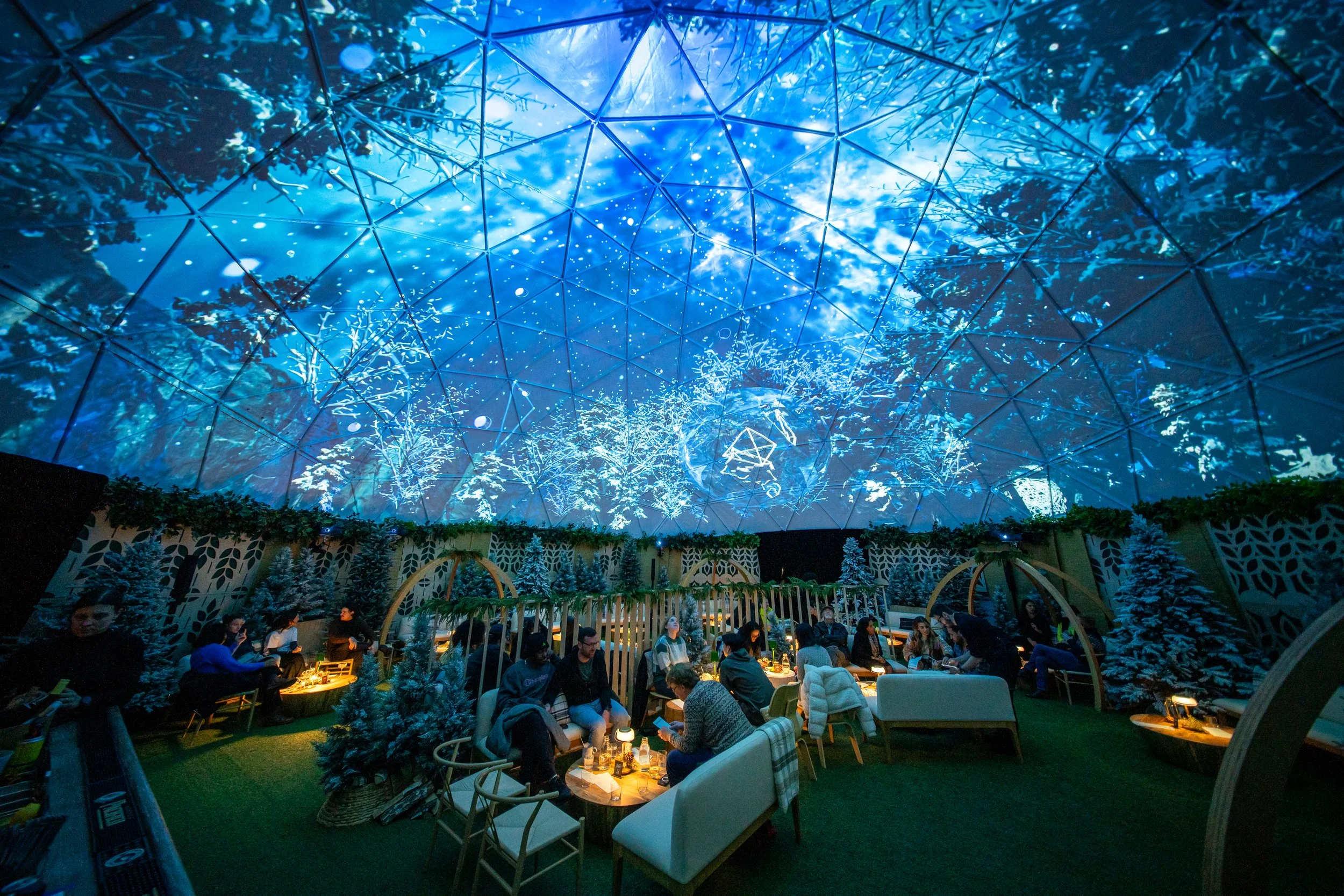
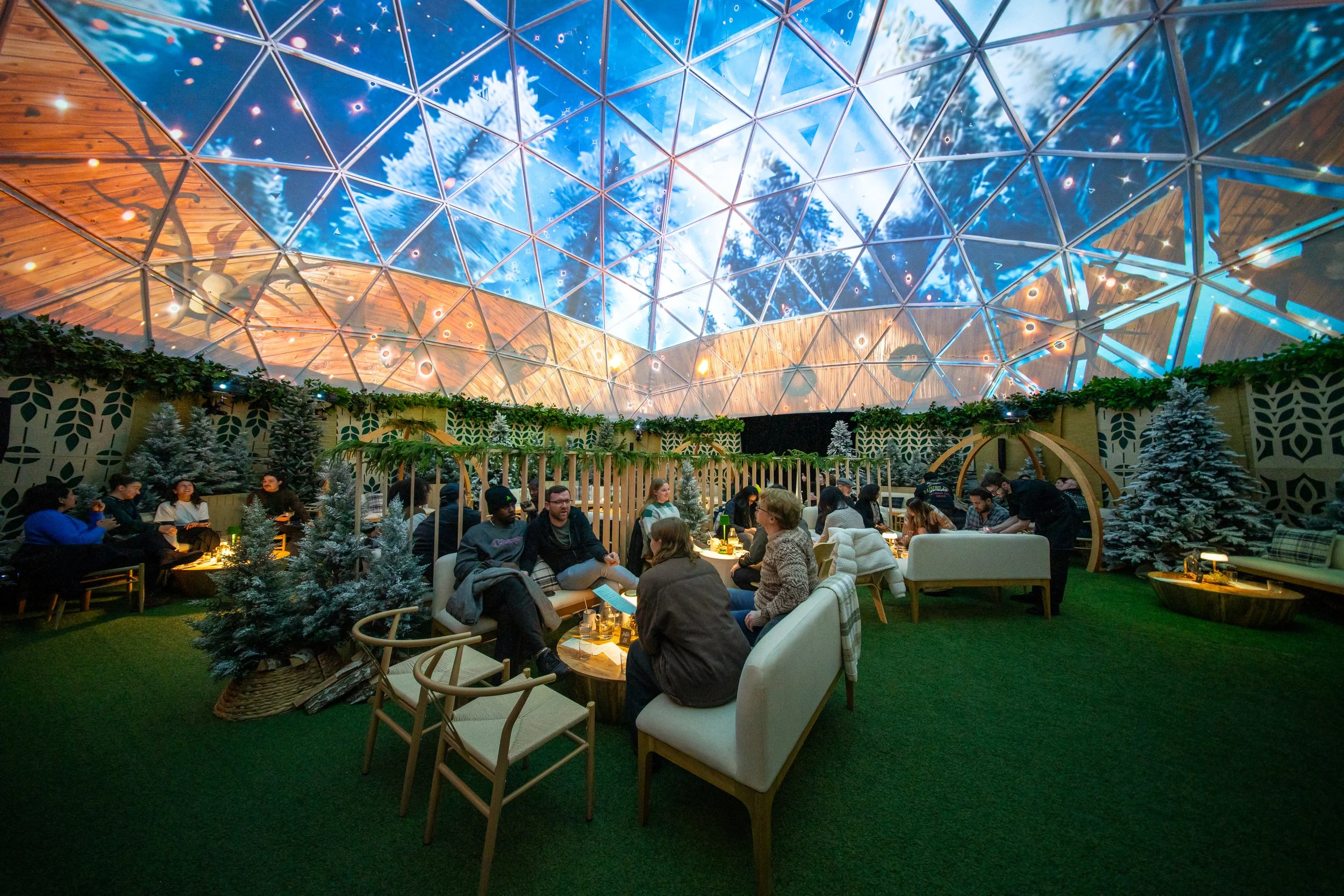
Then the room itself. Standing with cocktail tables, seated in chairs, tables, and lounges, or on the floor with a yoga mat or cushion. The question is never what the dome can hold. It is what the night is meant to be.
Format follows function. A 60 minute ticketed run, a lounge guests drift in and out of across a festival weekend, a seasonal installation that opens nightly. NOVA designs against the goal the venue or the brand actually has, and the content, the seating, and the sound follow that plan.
creative
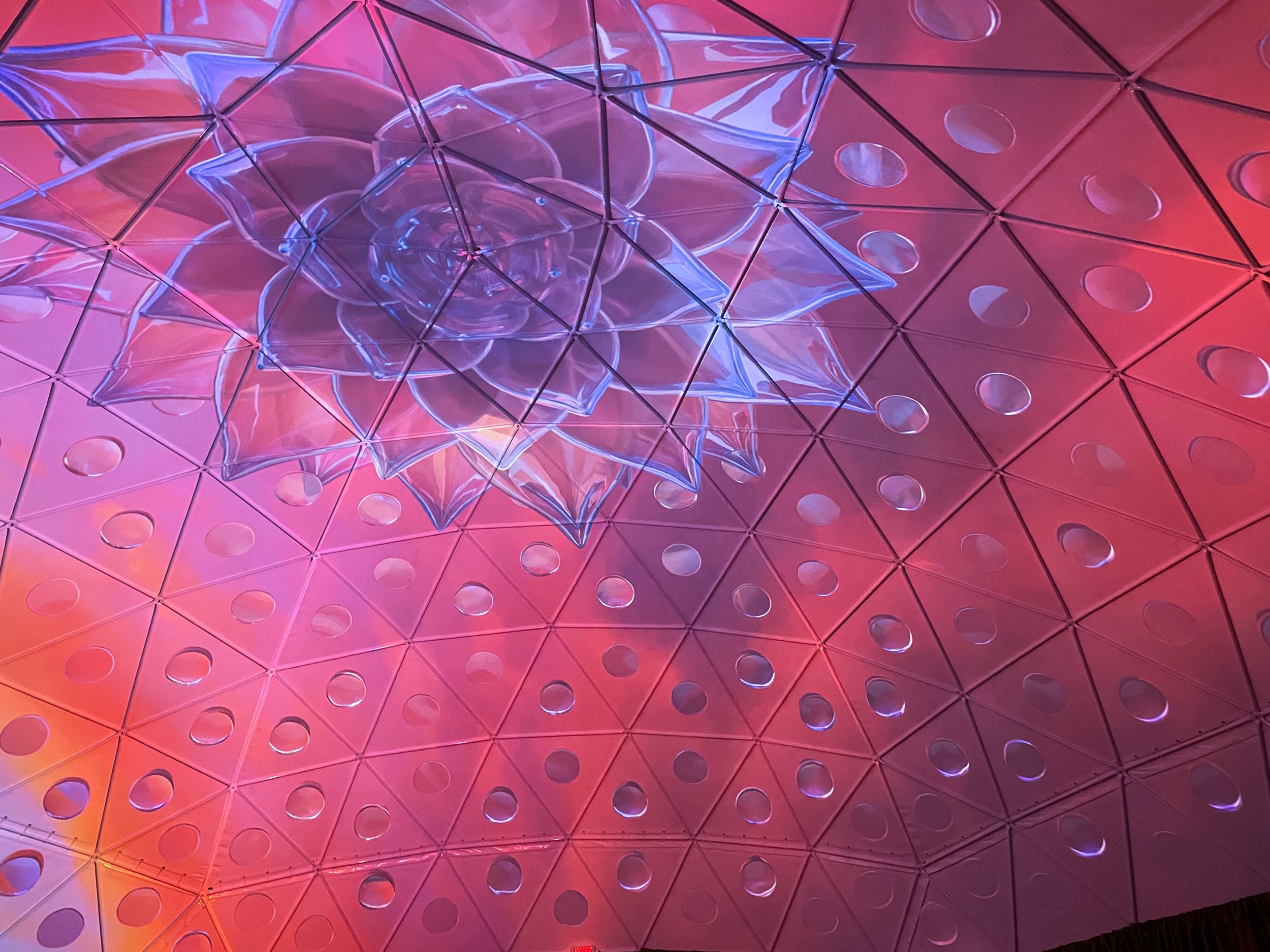
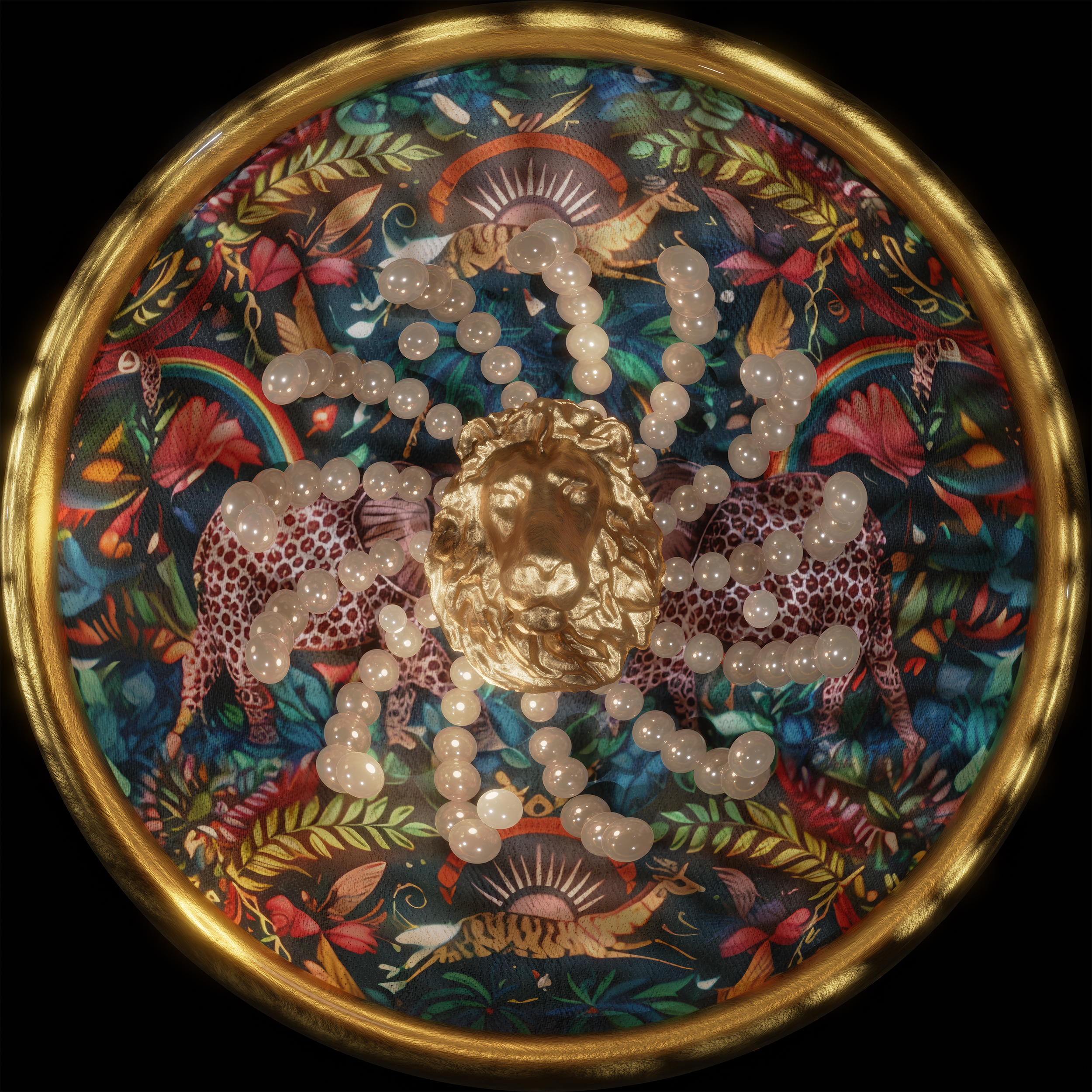
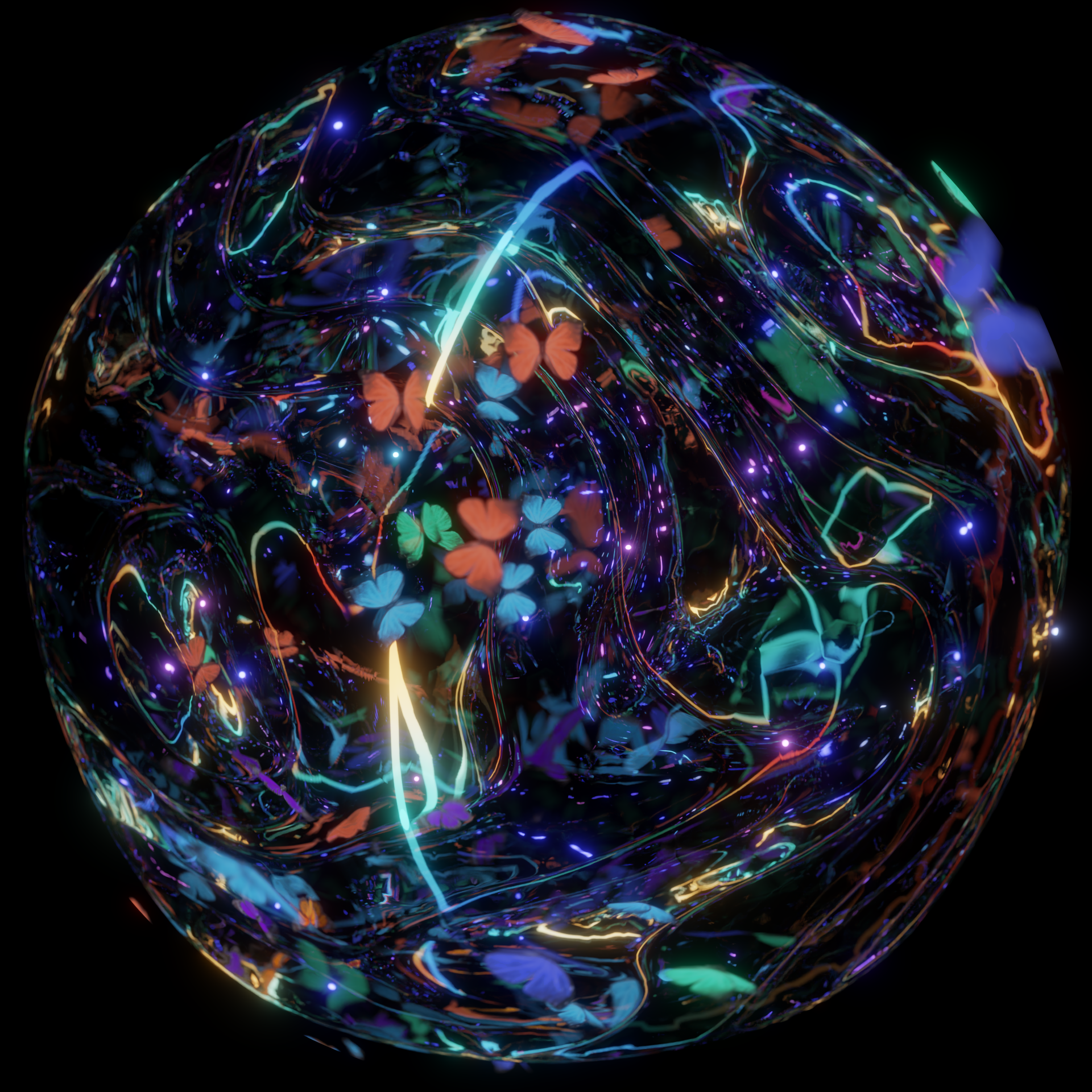
NOVA builds every 360º dome visual artwork for the space from the first frame.
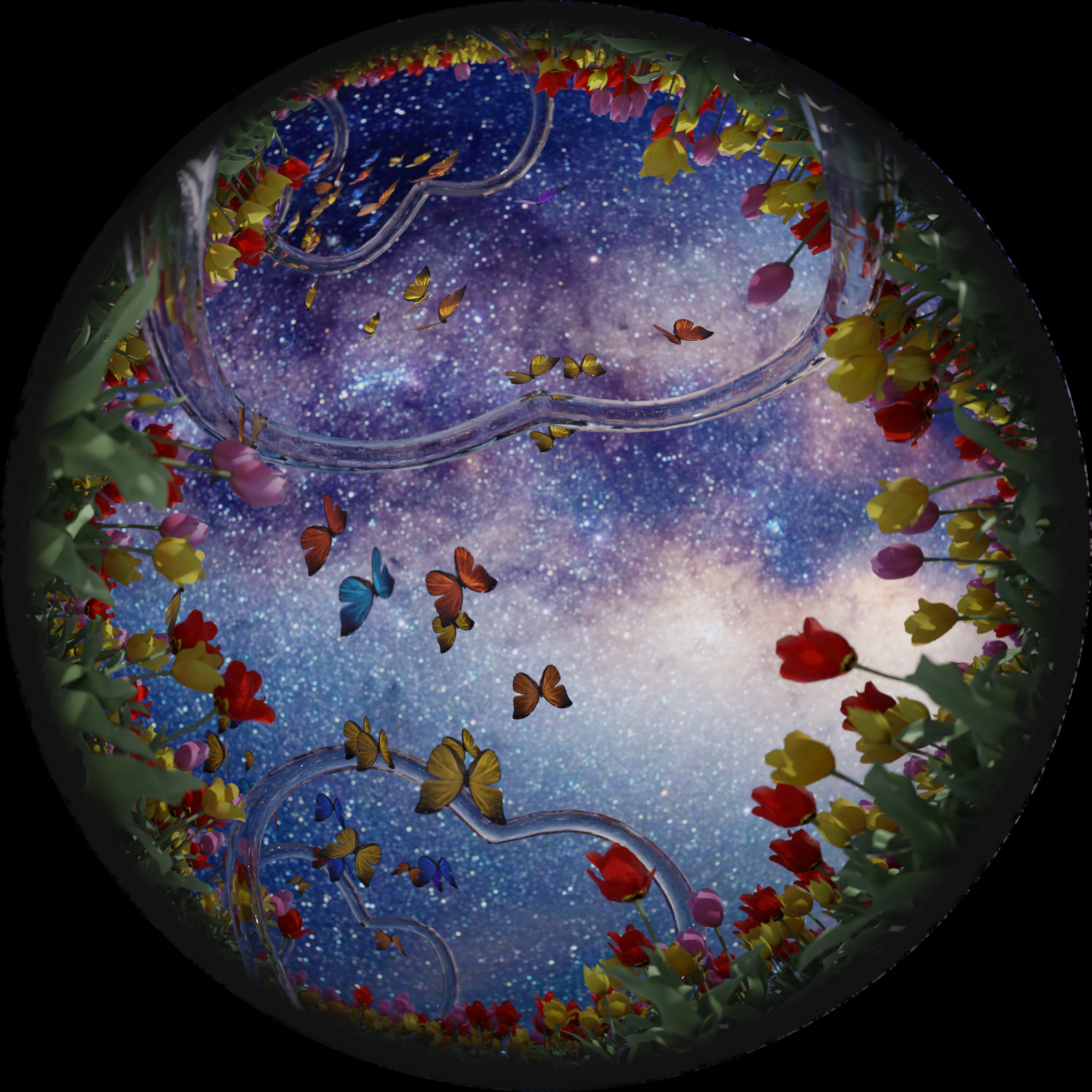
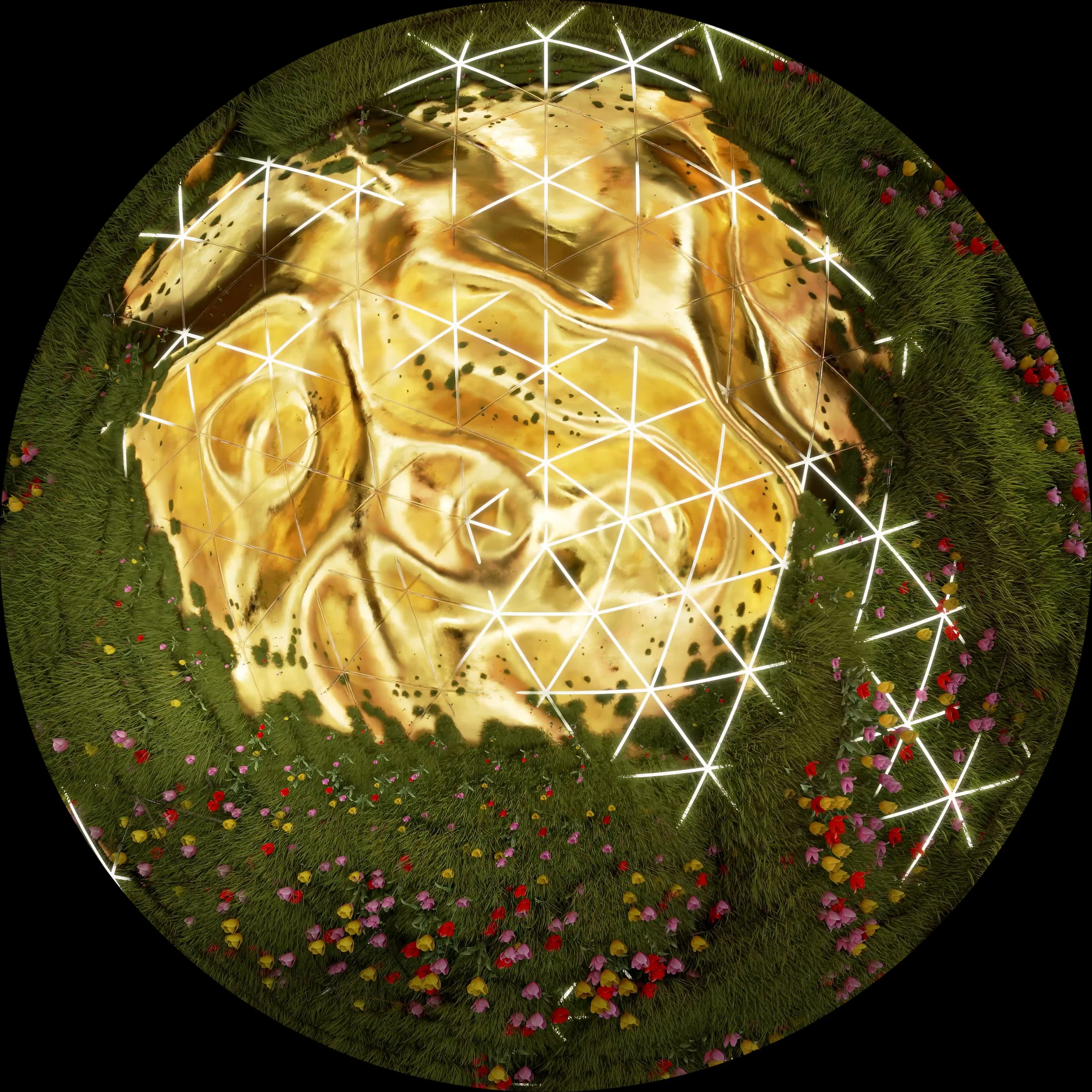
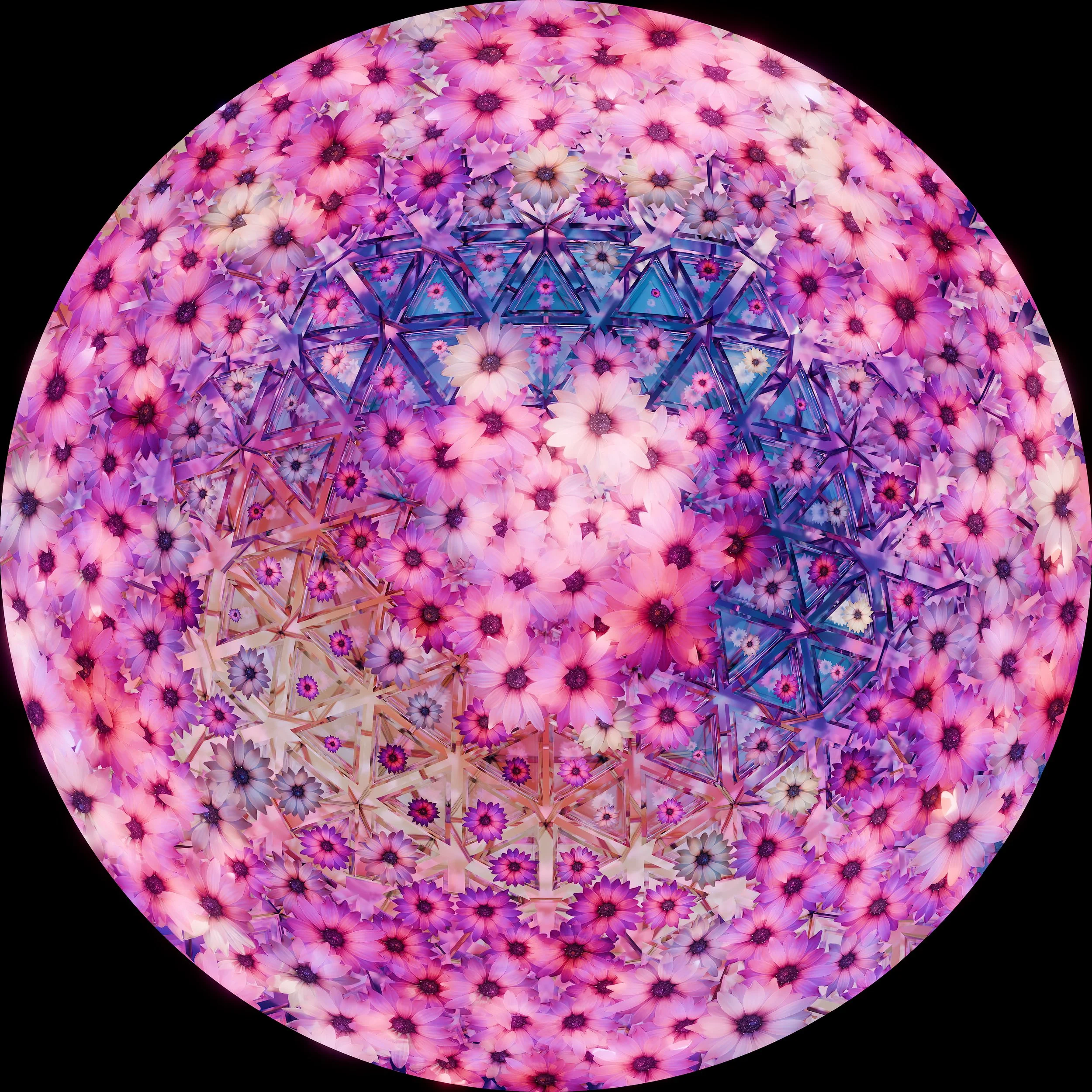
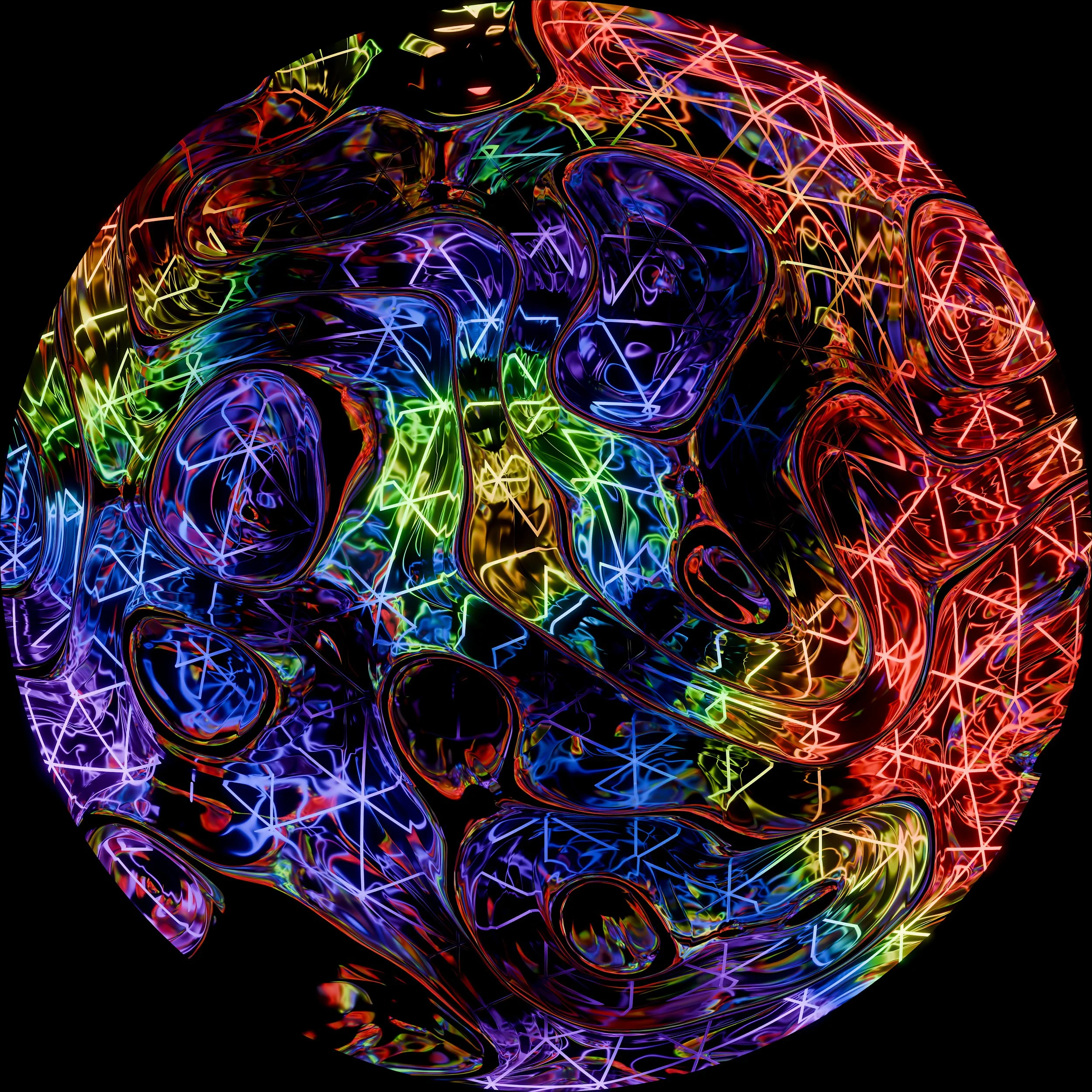
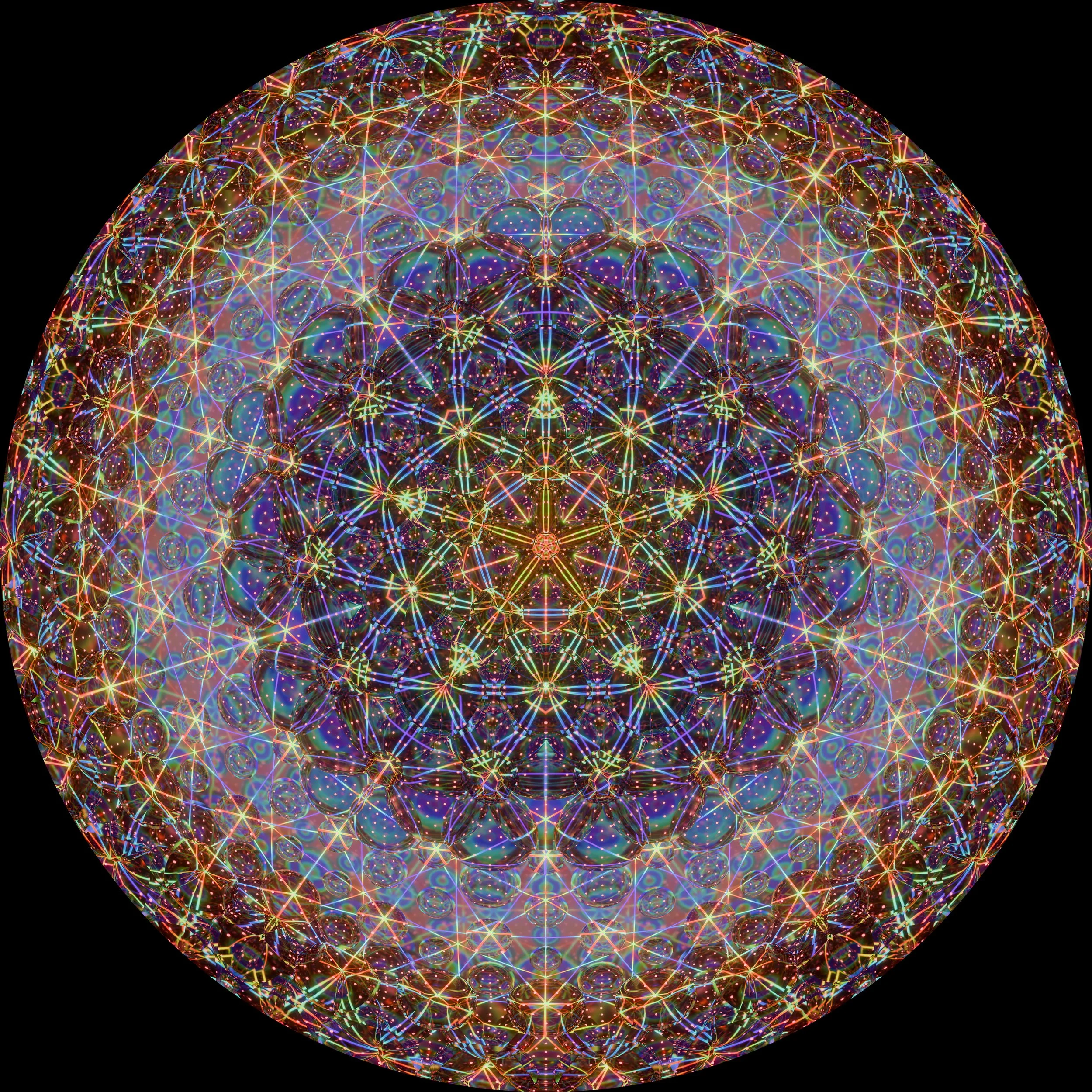
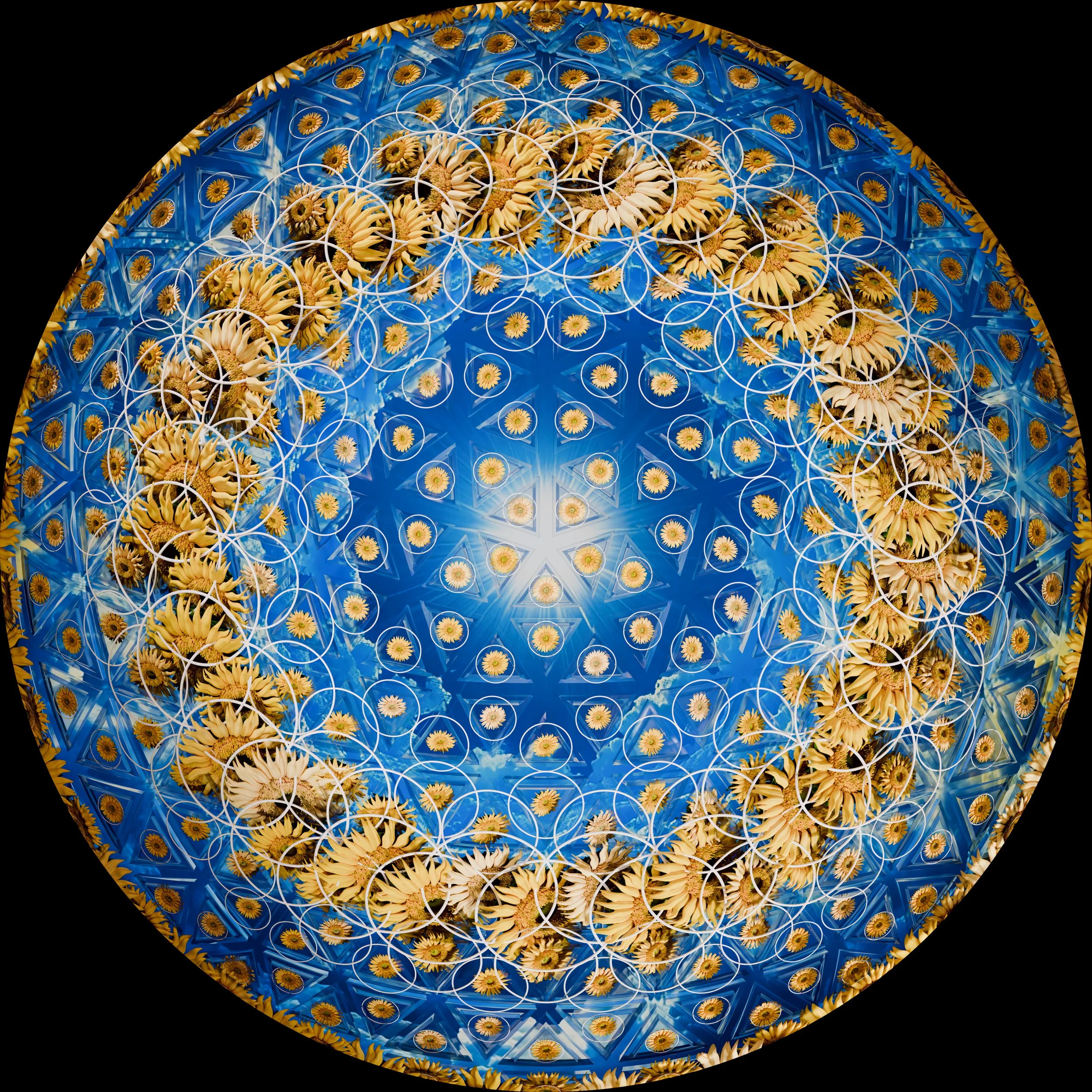
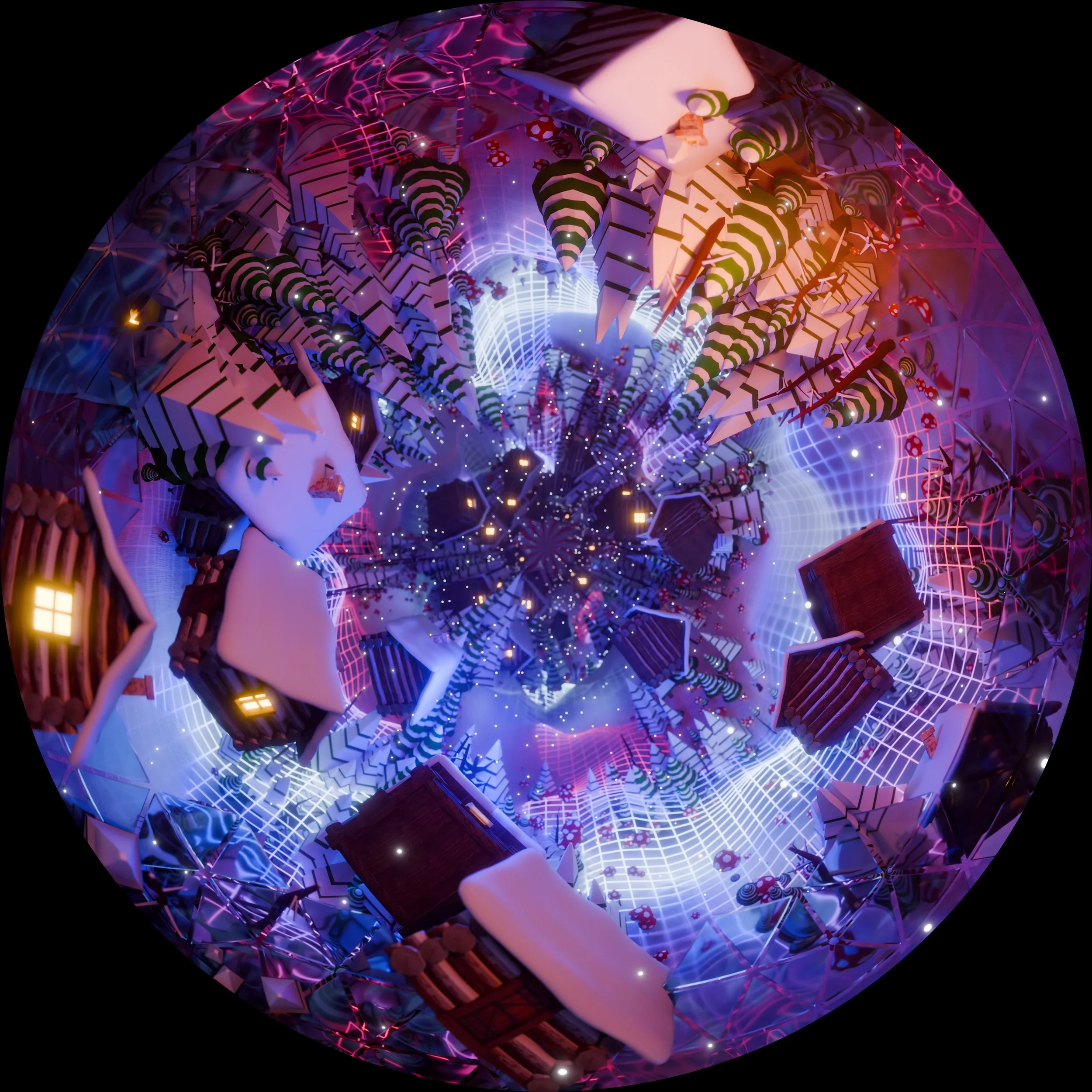
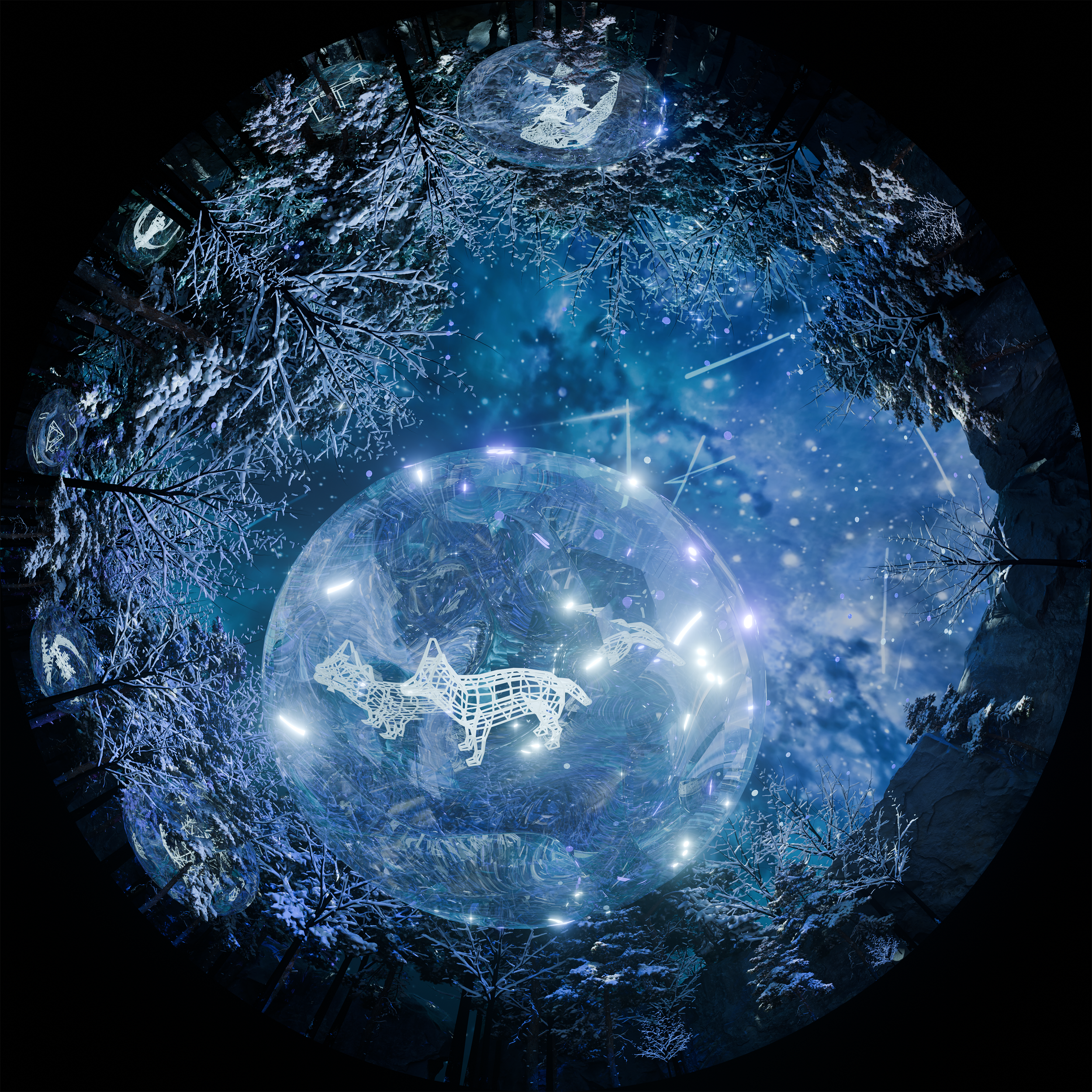
Flat footage fails on a dome. Stretch a horizon across the surface and half the room sees the world upside down. There is no up in a 360 field of view, so the artwork has to be authored inside one: a fisheye camera flying a scene built in 3D, rendered for the dome and for nothing else.
Dome Visuals
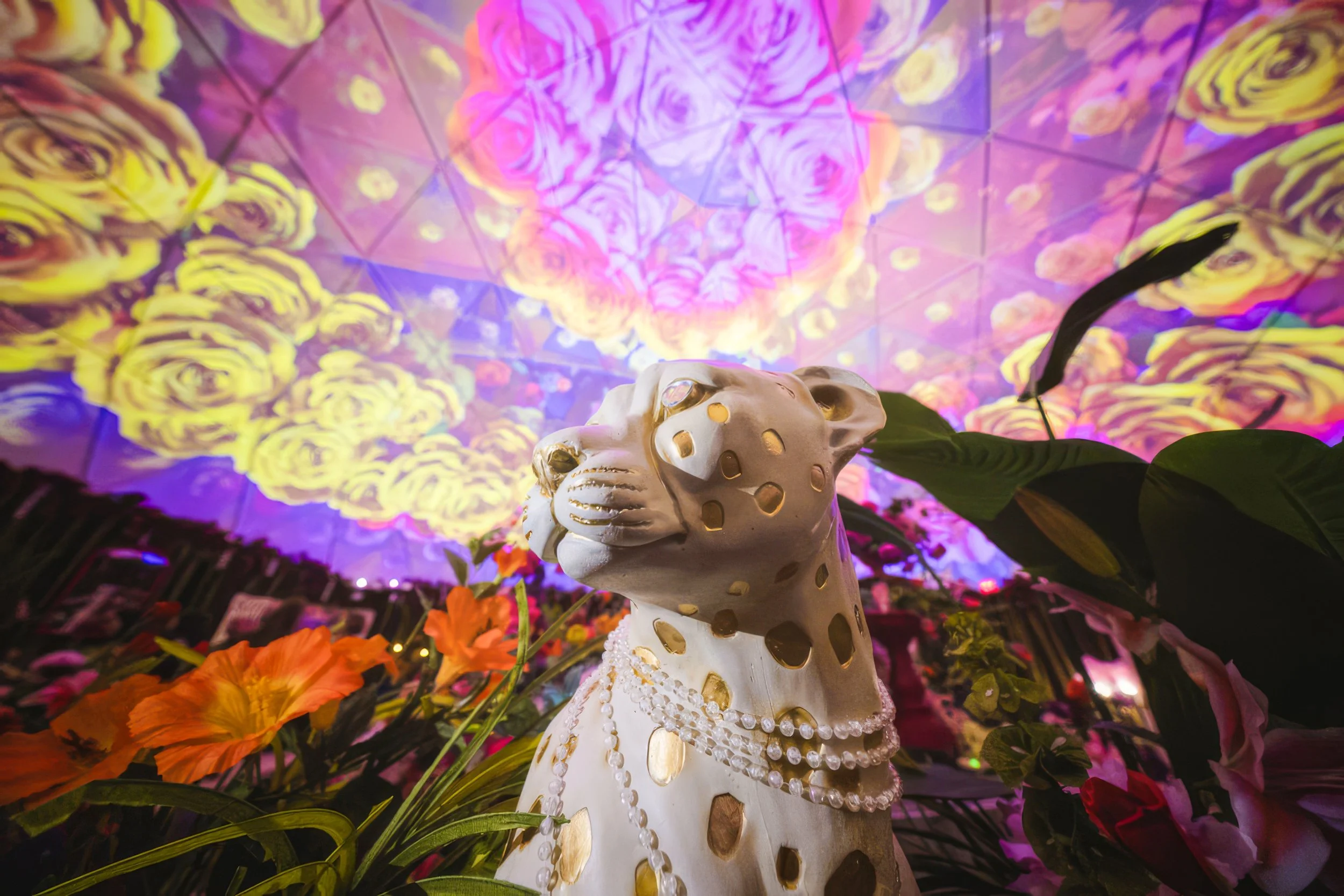
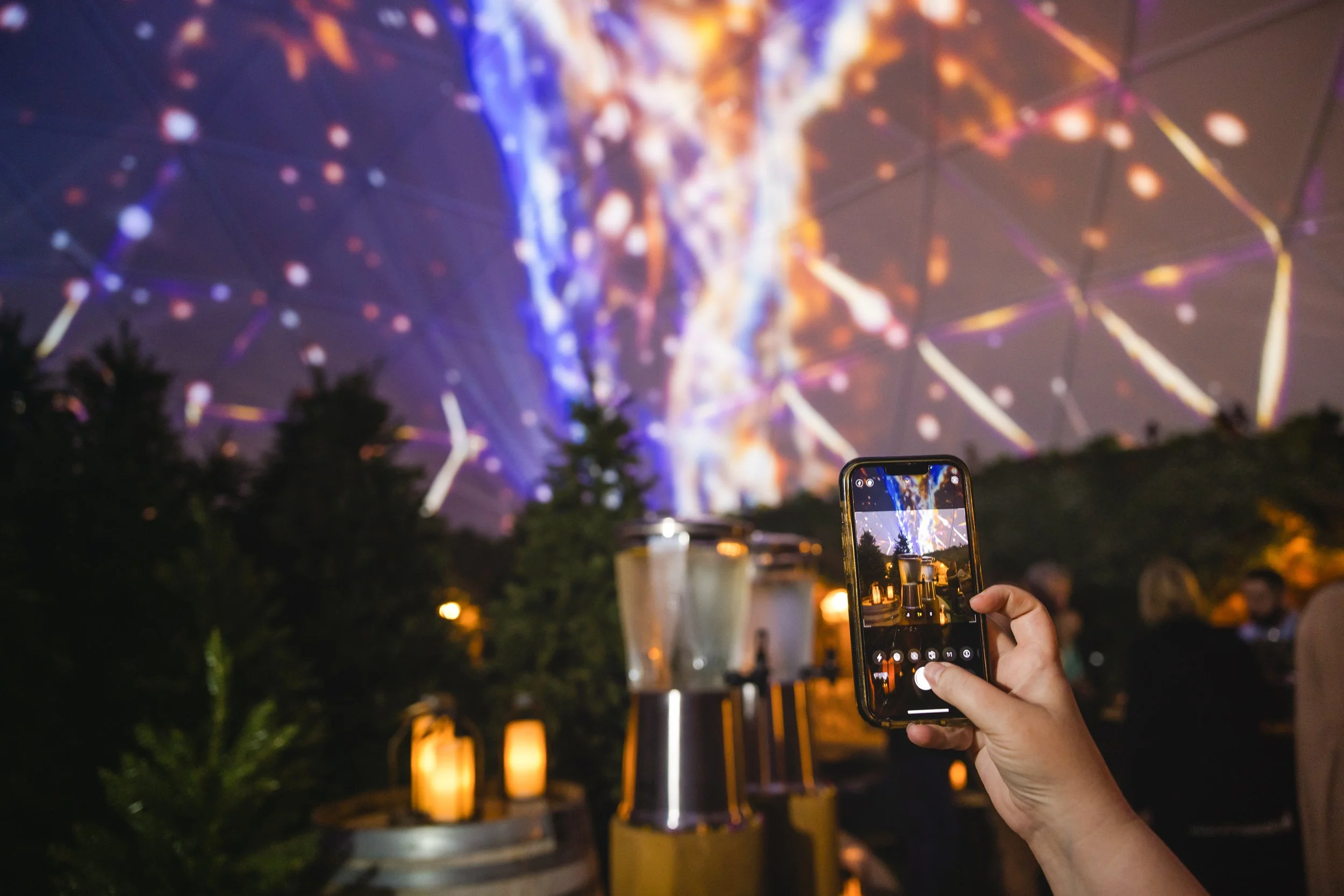
The range is wide. An alpine pass with snow crossing the whole sky. Abstract color and particle drift. Temple ruins cut by neon, a reef in slow current, a storm arriving overhead. Anything a camera can fly through, NOVA builds.
Struts vs Liner
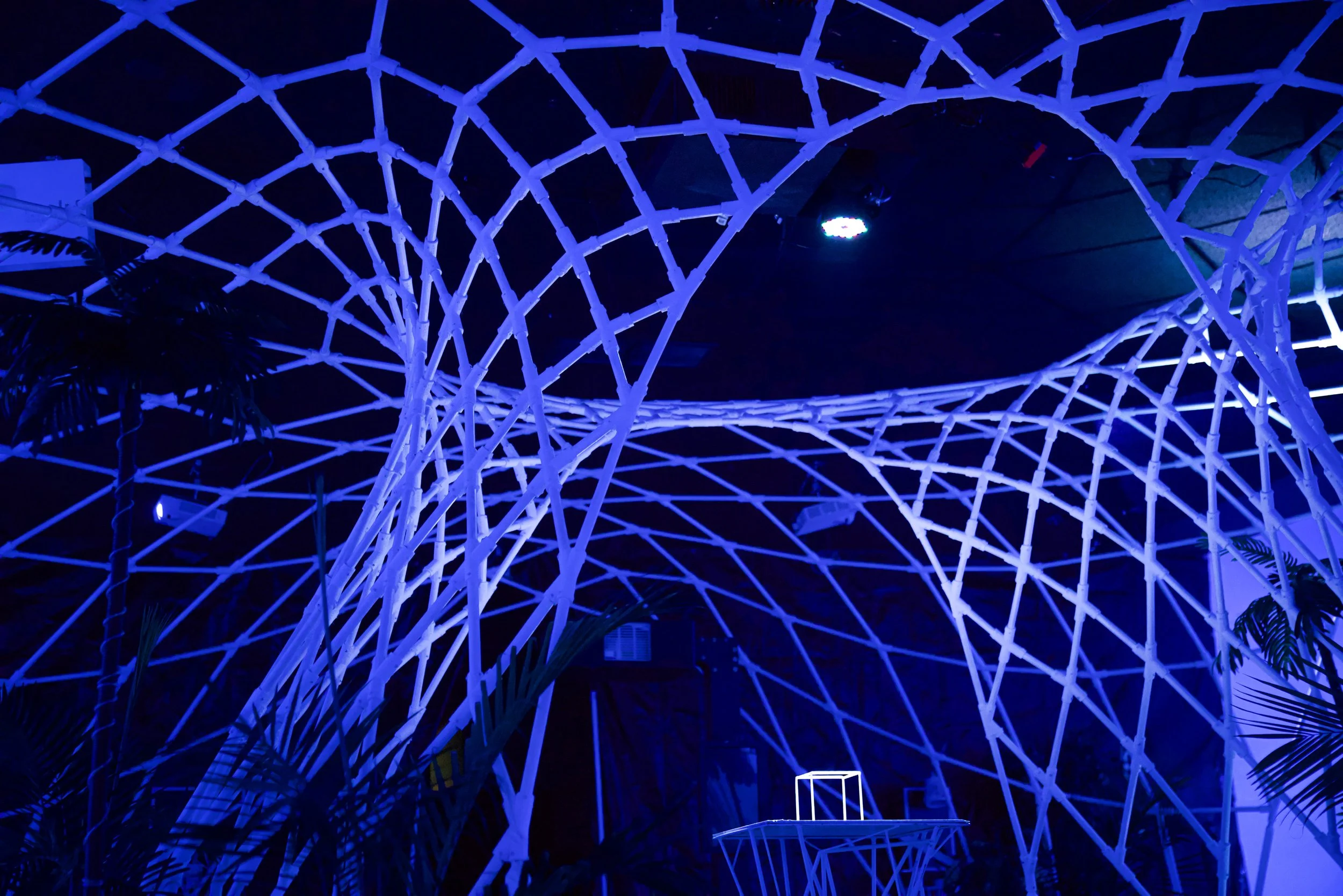
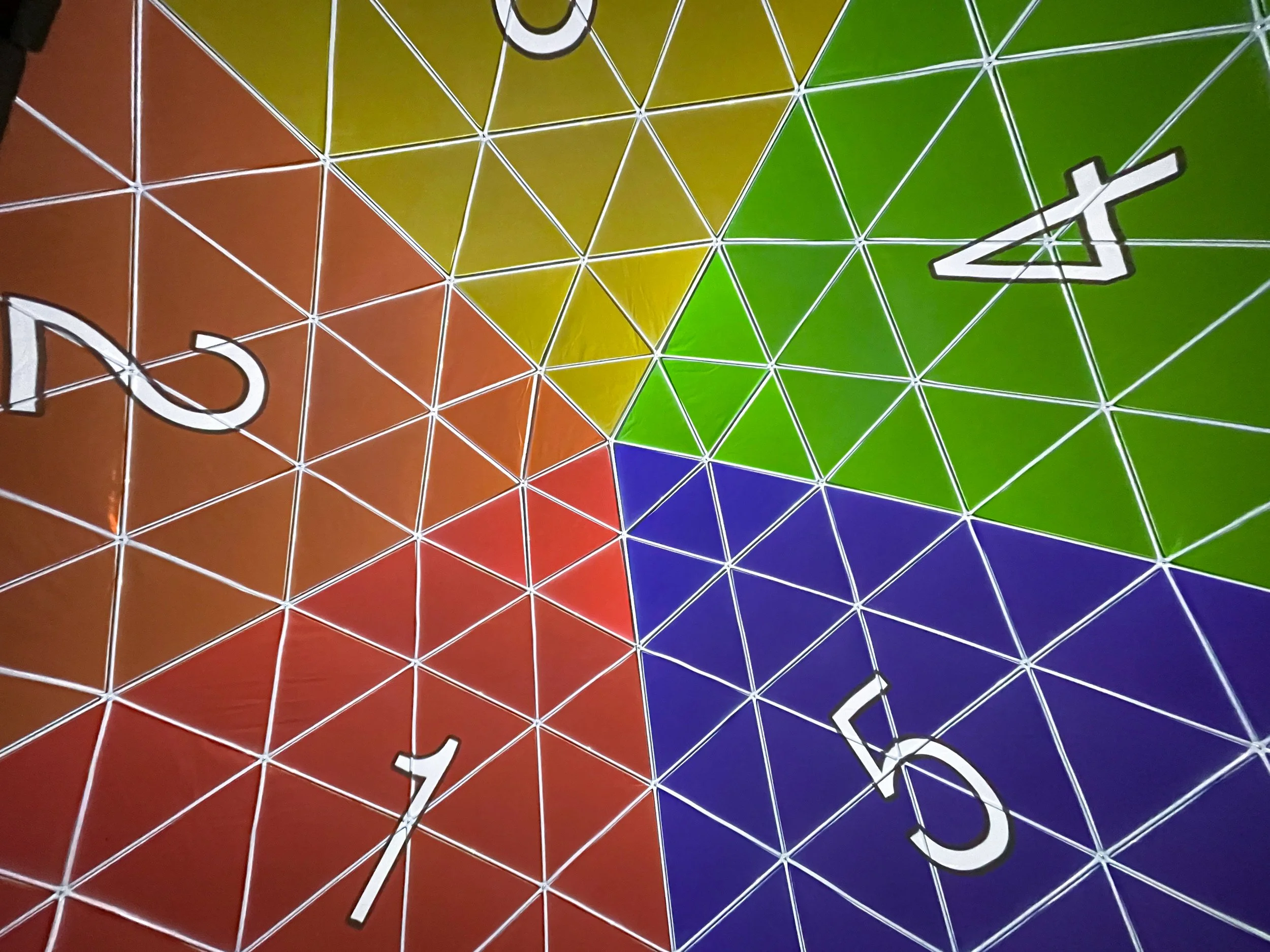
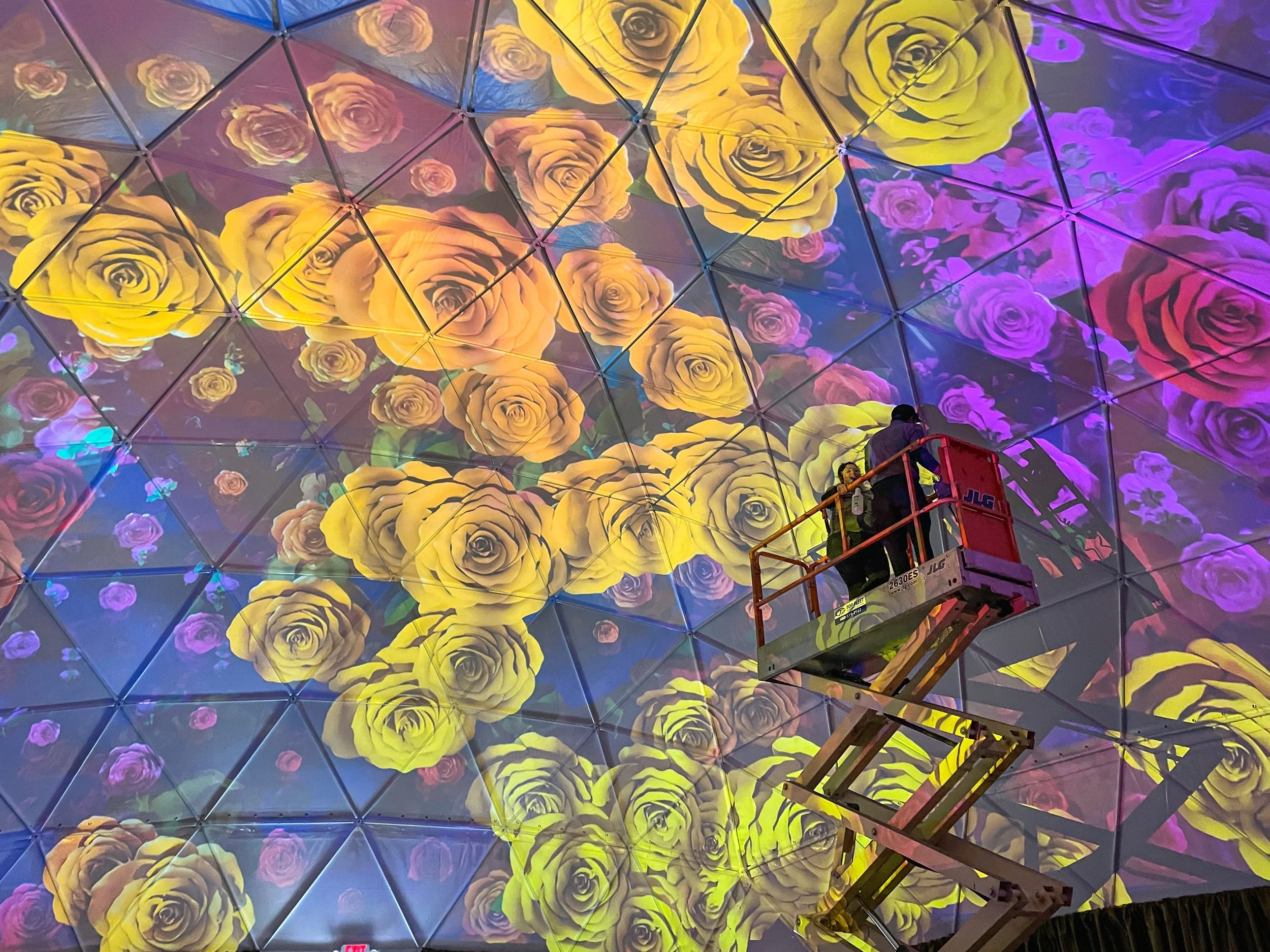
Struts are an asset. Most clients ask to hide the geodesic frame, and NOVA maps to it instead, tuning content to the frequency of the panels until the structure becomes part of the artwork. That is dome projection mapping doing what a flat wall never can. Where a piece has to read as cinema, the strut free dome is the call.
Movies & Video
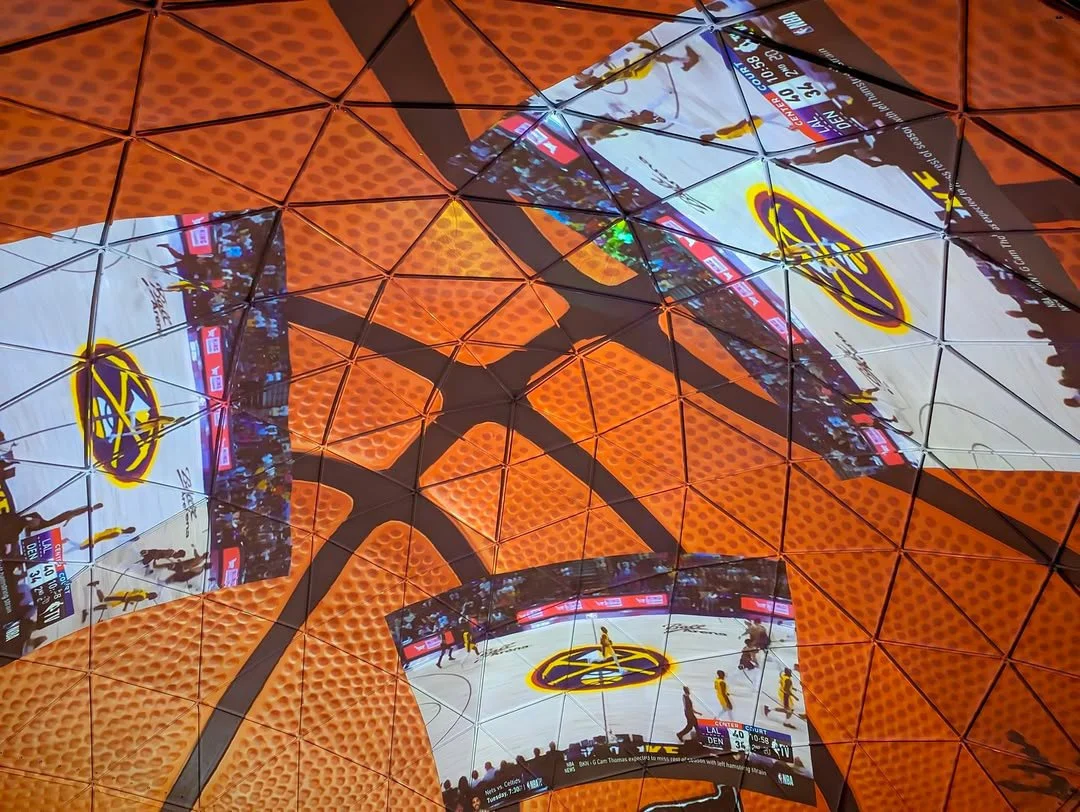
A film plays as synchronized copies around the ring, picture in picture, or as 1 framed image set inside the field so nothing inverts. Live sport streams the same way. A match, a keynote, a premiere, all without surrendering the room.
Immersive Audio
Sound is half of it. A dome focuses and reflects, quick to smear a mix that was not planned for the curve. NOVA specs surround coverage distributed evenly around the perimeter, so audio arrives from every position and moves with the image overhead.


production
A projection dome is a system: the structure, the projector count, the sight lines, and the build schedule all get planned before anything ships.
The work splits 3 ways: NOVA delivers the full project, the technical production alone, or the visuals alone.
Scale & Size
The shape does not change. Scale does. A 30 foot (9 meter) dome and a 100 foot (30 meter) dome are the same geometry at different capacities, and what moves is projector count, brightness, and blend. Below 20 feet (6 meters) the format stops working. Guests crowd the surface and bodies land in the beam, so the answer is a taller loft or a bigger dome.
The Curtain Line
The projection surface stops at head height. A curtain runs the perimeter and the image starts on that line. No glare, no shadows. It reads as intentional because it is, and every serious dome projection system uses some version of it.
Build Schedule
Dome builds take time. Half a day for a small structure, 2 days or more for a large one, before a single projector is aimed. Alignment, blend, and content load follow that. NOVA schedules the sequence against the venue's load in window and tells the client what the day actually looks like ahead of time.
Events & Permanent Installations
Domes work both ways. A 1 night pop up, a festival weekend, a tour activation, all struck at the end. Or a permanent immersive dome installation, where NOVA designs the system, specifies every component, oversees installation and activation, and delivers the documentation the venue runs it from. Run length is a decision, not a limit.
trusted by



“I had the best time at the dome this weekend! The ambiance and atmosphere overall were incredible.
The music matched perfectly with the constant moving videos and images.
It really looked like the outside of the Vegas sphere inside of the dome!”
Lindsay D.
Guest
Villa Fleur
FAQ
-
Projection mapping in a dome is an investment priced by scale and by run length.
A live event dome typically lands between $30,000 and $300,000, from a small structure to a large one.
A permanent dome installation begins near $100,000 and climbs to $1,000,000 and beyond, depending on scope, content volume, and system design.
Three things move the number: the diameter of the dome, the projector count required to light it, and how much original artwork the dome has to carry.
-
Projection mapping works in domes from roughly 20 feet (6 meters) in diameter and up.
Below that, guests stand too close to the surface, shadows fall into the image, and capacity drops to a handful of people.
30 to 50 feet (9 to 15 meters) covers most event work. 100 feet (30 meters) and beyond is festival and permanent installation territory.
-
Nearly any dome takes projection. Geodesic frames, inflatable domes, planetarium shells, a dome lofted above a lobby, even a partial dome or a single 180 degree section.
Material and framing change the approach, not the possibility. NOVA advises on which structure suits the content before a dome is sourced.
-
Dome content is built for the curve from the first frame, in 3D, through a fisheye camera that flies the scene the way guests will see it overhead.
Flat video stretched across a dome inverts for half the room, which is why stock footage does not survive the format.
NOVA designs original 360 visual artworks per project and renders them for the specific dome they will live in.
See the NOVA Visuals Library for plenty of examples and ready to license content.
-
Yes. Footage captured on a 360 camera or a 360 drone rig suits a dome well and maps cleanly onto the surface.
Flat brand films and logo content can also run, placed inside the field rather than stretched across it. NOVA reviews existing assets and says plainly what holds up on the curve and what does not.
-
Audio works well in a projection dome when the room is treated as the curved, reverberant space it is.
Domes focus and reflect sound, which smears any mix that was not planned for the geometry.
NOVA specs surround coverage distributed evenly around the perimeter, so sound reaches every position in the room and tracks the visuals overhead.
-
Setup runs from half a day for a small dome to 2 days or more for a large one, before projector alignment and content load begin.
The structure drives that schedule more than the technology does.
NOVA plans the sequence against the venue's load in window and gives the client the real timeline before crews arrive.
-
Capacity follows diameter. A 30 foot (9 meter) dome holds roughly 40 seated or 80 standing.
A 50 foot (15 meter) dome moves into the low hundreds. Seating style, staging, and entry design all shift the number, so capacity gets set during design rather than assumed from the footprint.
-
Projection domes run outdoors and indoors, and the deciding factor is ambient light rather than weather. Opaque shells and blackout liners hold a daytime show.
Clear geodesic panels need darkness or a liner treatment. NOVA specs the liner, the entrance, and the projector brightness together so the dome reads the same at 2 pm as it does at midnight.
-
A projection dome needs floor area, height clearance, power, and a load in path.
Clear span footprint wider than the dome itself, ceiling height above the apex when indoors, dedicated circuits for projection and media, and climate control for anything running more than a few hours.
NOVA walks the site or the drawings and confirms every one of those before the build is scheduled.